wingwmn

spreading my wings and sharing random lessons learned along the way

  • About
  • Life
    • Life
  • Curiosities
    • Design
    • Travel
  • Articles
  • Subscribe

Gone Wild

By wingwmn · Follow: InstagramAugust 12, 2020

[An open letter to my family]
.
My Dear Siblings,

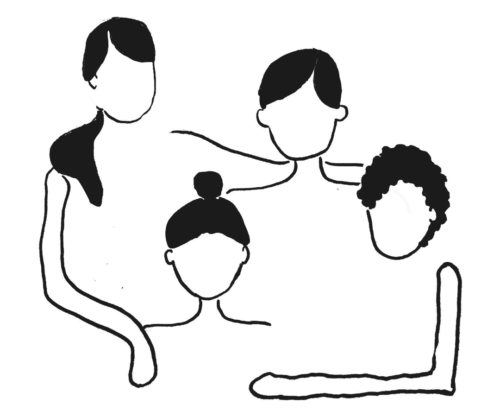
I hereby resign from the position of Unofficially Appointed Responsible Member of the Family. It has been an honor to have served in this capacity, which began when Mom handed me a wad of cash on her way to the airport and said “Keep your siblings alive while we’re away.” I will have you know that while I had the desire AND the power to only buy Chocolate Mallows, I bought chicken. Just so that you stayed alive.

I was 11 then. I’ve continued to be sensible since.

Through the years, I turned off the lights when you couldn’t be bothered to, I picked up the crumbs you dropped, I wrote the corresponding apology letters for your offenses. More recently, I started managing the family budget and payments. I hired the accountants and lawyers. I file, organize, plan. Remind, rearrange, prepare.

While you, my dear siblings, remain oblivious to the tedium. I can’t blame you. If I had a sister like me, I would do the same.

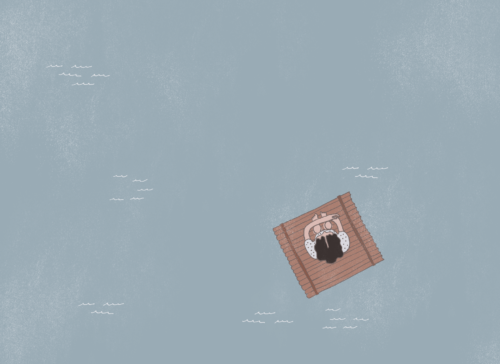
So, while you somersault carefree into the proverbial ocean, I watch wistfully from afar, tax returns in hand.

But today, my self-worth is drawing the line. She is demanding that I stop acting solely out of a sense of duty; stop being a martyr when nobody is asking me to be one. She is reminding me that life is too precious to buy the chicken. There must be something in it for me than just fulfillment of obligation — pleasure maybe, or a fun challenge, or proper compensation.

So meanwhile, I will start taking cues from you, my dear siblings.
I, too, will jump WILDLY into the waters — I may decide to keep the lid OFF the toothpaste. I might chomp into flakey croissant while striding over a carpet. I may even play an inordinate amount of golf just for the hell of it. Or buy a pet on a whim. Or even be late for a meeting AND zone out halfway through!

I’ll be unrecognizable, I warn you. Just you wait. I can’t.

Respectfully,
Me
Silence

By wingwmn · Follow: InstagramJune 6, 2020

Silence is Complicity, they say.

There is pressure to be vocal, to express solidarity, and to aid in the fight against the socio-economic structures that perpetuate racial injustice.

There is that loud call to rabble-rouse.

But in all this, there is also a place for Silence.

Because it is through silence that we recognize our ignorance. It is with silence that we bow our heads and concede “I didn’t fully comprehend what you were going through.”

It is also through silence that we are able to cure this blindness. When we are quiet, we can listen and we can learn.

It is only in silence that we can hear our own unconscious biases. When we are still, we discover how our minds react to whom our children play with, how it determines whom we are willing to go on dates with. When we are quiet, we can observe how we choose the neighborhoods we live in, whom we hire, and how we unconsciously pass all these biases to the next generation.

It is in silence that we can pick apart these prejudices and incite a change that emanates from ourselves.

And it is with silence that we step aside and give the full vast floor to the voices that deserve to finally be heard.


I would love to hear what you think. Let me know in the comment section below.

original photo by https://www.pexels.com/@rickyrecap

Sheer Miracle

By wingwmn · Follow: InstagramMay 9, 2020

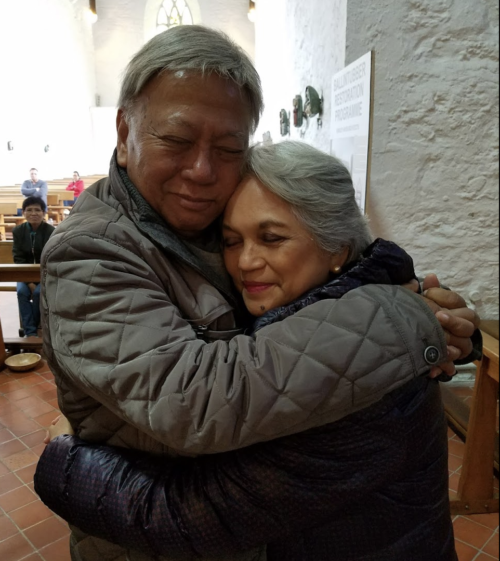
He’s a veritable promdi (provincial kid) with vivid childhood memories of cavorting in the river and being circumcised under a tree. She’s a bona fide city mouse with memories of traveling the world with her cosmopolitan mother.
*
He’s a history enthusiast who knows every battle line in every theater of WW2. She’s a former history teacher (and Dept Head) who can barely tell the difference between Jose Rizal and Napoleon.
*
He is an introvert academic who graduated top of his classes and got into the best schools. She is an extrovert non-academic with 100% attendance at all parties.
*
He is an affectionate softie who believes in the power of ALWAYS holding hands. She expresses warmth through text.
*
He leaves most everything to fate and trusts in life’s unfolding. She has a will so powerful that it submits life itself into compliance.
*
He is a dreamer with his head sometimes caught in the clouds. She is a realist with a gaze fixed on the ground for any dog poop or for any treasure.
*
He is very big picture. She is details, logistics, the machine that keeps the family alive and fed.
*
He is going stir-crazy in quarantine. She is absolutely thriving.
*
The secret to this marriage of opposites — as we, their kids and witnesses, conclude over and over — is 5% love and hard work, and 95% sheer miracle.
.
Happy 49th, parentals! We pray for endless love and magic!

Crisis and Freedom

By wingwmn · Follow: InstagramApril 29, 2020

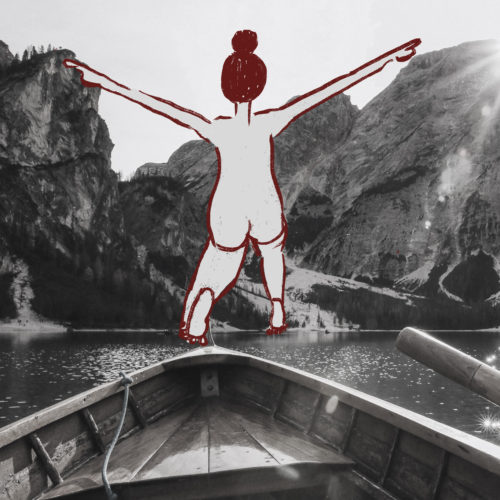
This time each year, I usually escape into a solo trip to fill my seemingly insatiable appetite for silence, and solitude, and freedom.

This year, I find myself in just about the EXACT opposite situation — locked down in my childhood home with my parents (and baby sister). If there’s one thing I am learning in this adventure, it’s this: all that childhood trauma you thought you’ve successfully namaste’d out of your life while living away? They were hibernating until the time you decide to quarantine with your parents. Then they fully activate.

It’s easy to be zen yogi when you live alone. Or at least on your own terms. But back under the parents’ roof?

A word, a gesture will be enough to trigger your childhood fears or teenage angst. A comment will conjure up those times you were convinced you were going to be put up for adoption.

But the difference is now, you have more options available than just the pavlovian response. You have the agency to disassociate yourself from the trigger. You possess the wisdom to take a breath, the space to examine your feelings, and the freedom to google “can parents be adopted?”. (adult adoption apparently is a thing). (Just putting it out there).

Oh Tong and Daisy (and Lex), you do not offer an ounce of silence or solitude these days, but you do provide endless opportunities to choose how to respond to all your triggers. For these incessant exercises in freedom, I am grateful. Thank you for being my quarantine tribe.

But I’m still sending you my shrink bill when this is all over.

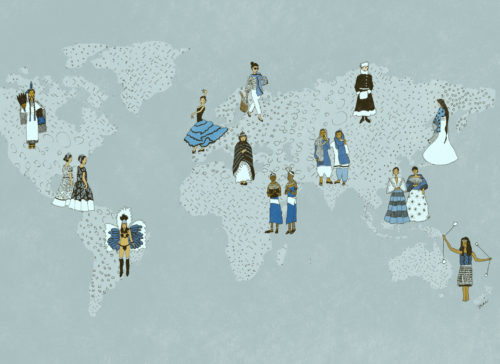
Note: this map is neither here nor there. Just an expression of how much I miss traveling, and that includes travel to the corner grocer.

In Memoriam

By wingwmn · Follow: InstagramApril 11, 2020

We will get through this. As proven time and again, mankind will overcome this struggle as he has done before — over wars, plagues, natural calamities. This pandemic will be no different. We will find a cure or a vaccine soon enough, and we will be through this.

All of it will be behind us.

That is my worry for myself: that all this will be behind me. Including the sadness I am feeling over the countless deaths left in the wake of the pandemic.

I know my capacity to forget this experience. I can return to a neo-normal life and designate the sadness and anxiety I currently feel to the corners of my subconscious. My memory can easily re-characterize this pandemic as the pleasant time I cocooned with family and conquered my reading list.

And what a waste all this would have been.

Man and Mortality

Man has a peculiar relationship with death. For the most part, he tends to ignore her. He walks around convinced of his invulnerability. When illness or danger befalls him, however, mortality takes over his mind. Death becomes acute and all-consuming. Then, again, the moment man overcomes the danger, death immediately reverts into a remote theoretical concept. It can’t happen to me. How we so easily forget.

It is hard to grasp the idea of our own mortality. When corona struck, and the news of mounting deaths became inescapable, I was devoured by fear and anxiety. Corona reminded me that death plays no favorites, and I became keenly aware of my impotence against her.

As soon as we got over the 14-day quarantine period uneventfully, the threat of death receded and I automatically slipped back into my invincibility. With each additional day of security in lockdown, I believed less and less in my own death.

Of course, all hubris. The great reminders of the pandemic are these two immutable truths: Death comes for us all. And she comes when she wants.

Meditation on Death

As tragic as it is to lose countless lives is to emerge from this pandemic missing the opportunity to change our perspective on death. French philosopher, Montaigne, said, “Let us deprive death of its strangeness . . . Let us frequent it, let us get used to it; let us have nothing more often in mind than death . . . We do not know where death awaits us, so let us wait for it everywhere.”

Reflecting on mortality is a practice that has been advocated for centuries. Ancient Egyptians would bring out a skeleton during festivities as a reminder to enjoy because death can come at any moment. Roman generals being celebrated for their military victories had slaves continually whisper in their ear ‘Memento Mori. Remember, you are mortal’ to keep perspective. As an extension, Stoics carry memento mori tokens, Buddhists meditate on mortality.

I am trying to do the same during this quarantine. Instead of turning away from news stories of death, I sit with them. I read about the lives of the lost, think about how stealthily and suddenly the virus took over. I think about what the victims might have experienced, what belabored breathing might feel like. I think about what it might have felt like to die alone. I think about death when I am emotionally triggered, or when I run out of patience. But I also think about death when I’m happy, when i’m having a nice meal with family, or a good workout. I talk about death with family and friends. I remember my impermanence daily.

Meditating on mortality does not have to be labored or oppressive. The practice can be light and joyful, particularly when we realize that we are all on the same wave moving us forward — death ceases to be a ‘goodbye’ but a ‘see you again’. By having her continuously in mind, death becomes a little less strange, a little less scary. Mostly, she becomes a guiding spirit.

Mozart told his father, “I have made myself so thoroughly acquainted with this good and faithful friend of man, that not only has its image no longer anything alarming to me, but rather something most peaceful and consolatory. . . I never lie down at night without thinking that I may be no more before the next morning dawns. . . . I daily thank my Creator for such a happy frame of mind, and wish from my heart that every one of my fellow-creatures may enjoy the same.”

My hope is that this great reminder is not left behind me after this pandemic. Should I be fortunate to see the other side, I hope the wisdom of death’s inevitability and her unknowable timing would have seeped into my bones and integrated into my every thought and action. So that I live the rest of my days relishing the gift of each morning; reordering my priorities; embracing all that I am given — the joys and the pains; hugging my loved ones; letting go of my ego and resentments; forgetting my attachments; and laughing hard. To succeed would be to honor all those whose lives have been recently taken by this new and faithful friend, death.

**

I would love to hear your thoughts. How are you all making out in these times? Please comment in the section below.

Original photo by Free Nature Stock from Pexels

Numbers

By wingwmn · Follow: InstagramMarch 24, 2020

We’re all bound to get it, you say.
Eight out of ten people will fall ill.

But even then, you say, we’ll be fine.
The numbers show
Eighty percent of cases are mild,
Plus, of our age, less than half a percent perish.
We will be fine.

How cavalier, I say,
for you to speak for just one body.
Your one singular body.

Because for many of us,
who live with the elderly,
and who attend to the vulnerable,
our bodies are not just our singular bodies.

For many of us,
our bodies are entwined
by a breath, by a cough
to other bodies.

So, the numbers you tout do not apply to this body.

This body is as old as the oldest in my care:
eighty one.
It is as pounded as the most vulnerable:
three bouts with cancer.
There is, therefore,
zero percent margin of error,
and one hundred percent terror.

These are my numbers.

But even then, I fervently pray,
that you are right.
That we will be fine.

Broken

By wingwmn · Follow: InstagramMarch 19, 2020

Our world is broken. And like a broken leg that needs to heal, we are being asked, through the lockdowns that are being imposed in some countries, to allow our world to heal.
*
Sure, any break is a shock to the system. One moment, we’re training hard; the next moment, we’re on the floor with a snapped bone, and life, for the foreseeable future, is rendered entirely different.
*
As such, our minds struggle to perceive the sudden new reality. It either wants to grasp on to the former unbroken state, or fast-forward prematurely to the healed state. Our minds insist on living the life it has known. But anyone who’s had a broken leg knows that if we ignore what is broken, if we ignore the requisite transition time, we pay the consequences.
*
The good thing is we are no strangers to change. Transition is our default state, always drifting from shore to shore — hungry to comfortable, young to old, healthy to sick. We know how to adapt, albeit with a mental lag.
*
However, a mental shift NOW is IMPERATIVE. We need to finally accept that our world is broken, and that it will be a while until it heals. We cannot insist on latching on to a normal life — with “innocuous” dinners out, happy hours, brunches with friends, and gym visits — without paying the consequences.
*
Because absolutely NOTHING about this new reality is normal. Every time we step out of the house, every day we require employees to go to work (in non-essential industries), we increase the risk of virus spread, of hitting the vulnerable and elderly, of burdening our hospitals, of further endangering our healthcare workers.
*
We shouldn’t take the cue from our governments who are struggling to grasp the reality (here’s looking at you, US and UK). We need to think for ourselves. Because in this pandemic, if one country screws up, we are aaaall screwed. So, let us settle into this necessary transition, get comfortable in our homes, and allow the healing to happen

*

#stayhomepeople

Retaining the Important

By wingwmn · Follow: InstagramMarch 8, 2020

My dad’s mind has been quite picky lately. It doesn’t hold on to a whole host of things like appointments, dates, and doctors’ diagnoses. He defends it by saying “why should it retain anything that’s unimportant?”
*
Meanwhile, he tells elaborate stories replete with incredible detail about things that happened 40 years ago. “Hey,” he usually starts. “Do you know how I ended up with this ash-covered land that I converted into this adventure park?” “Do you know how I got the idea to build a school?” “Do you know…”
*
My inner drill sergeant chooses to focus on his memory gaps. “Yeeees dad, you’ve told this story many times. Most recently, this morning. More importantly, did you take your meds? And must you drink that wine? Your doctor said you’re a beer away from liver cirrhosis, remember?” “I don’t remember. Anyway, that’s unimportant,” he’d say.
*
Recently I got tired of (and depressed by) the drill sergeant act. And I started to listen to the stories again.
*
About how he and his friends embarked on the crazy idea of building extreme rides in the middle of nowhere, and consequently vitalizing the surrounding towns. How, despite the struggles, he and his partner built a university from scratch in 4 years. How, for 20 years, he would tell everybody how his Congressional proposal for a tunnel-bridge across Manila Bay would solve Manila’s traffic problems and is finally and only now being implemented by the government.
*
I listen to him talk about his future projects — the beach resort he wants to build, the documentary on Bataan he wants to produce, the high-end restaurant in Bataan he wants to start. I, of the wet-blanket kind, respond, “Really? At your age? With zero experience?”
*
“Those are unimportant,” he says. “If i focused on those things, my life would have turned out very differently.”
*
Last week, we went back to his liver doctor for further test results. The giddy doctor reversed his earlier pronouncement and exclaimed, “Your liver is finnnne!”
*
Such is the magic of picky minds that retain only what is important.
*
Happy 81st birthday, Daddy-o! I love you, and I’m so glad i’m listening.

On Language, Love, and Transformations

By wingwmn · Follow: InstagramNovember 22, 2019

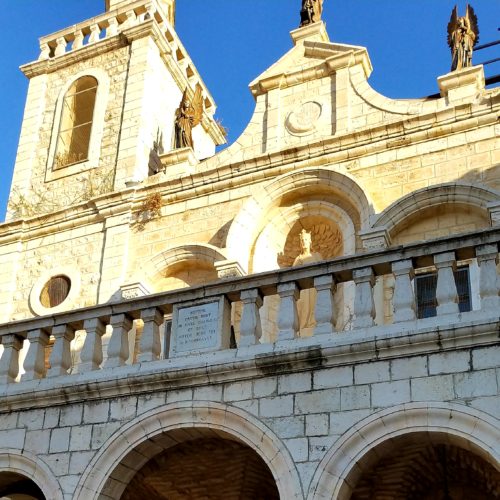
Cana, Israel

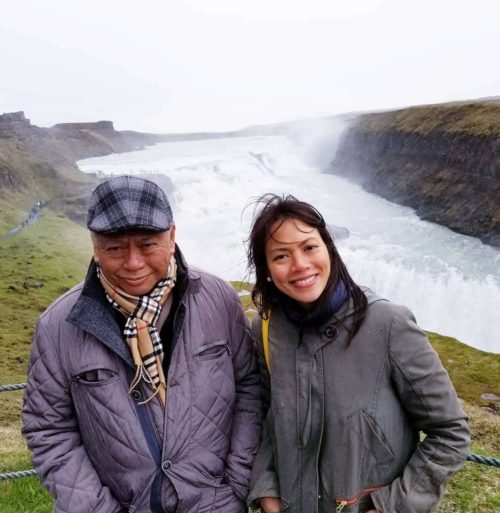
It was in a wedding at Cana that Jesus performed his first miracle. When the wedding party he and Mary were attending ran out of wine, Jesus transformed six jars of water into wine. I suppose it is the wedding setting of this miracle that has inspired tourists from all over the world to get married or renew their vows in the church here. Seven couples, including my parents, renewed their vows in Cana during this pilgrimage. Fr Phil Estrella, our pilgrimage chaplain, celebrated a lovely mass for them. My thoughts below were inspired by his homily on love and marriage.

*

Language and the Human Experience

Language and the human experience are intrinsically linked.

Language is the prism through which we see the world. It is the tool by which we process and understand our experiences. Without the appropriate words, the experience cannot take root in the formation of our personal and cultural identities. Our words mold us.

The words we use also influence our response to events. In the theory of linguistic relativity, it is believed that different cultures respond differently to the same experience depending on the words available to them. Seeing a cute chubby baby, for example, may not trigger the same strange urge to pinch and bite it if the word gigil did not exist in the vocabulary.

Moreover, our language is a reflection of our shared reality. Our vocabulary reveals what we collectively find significant in our experiences. We know how integral snow is to the Eskimo culture by the number of terms they have for snow. Same goes for Filipino and rice (palay, bigas, kanin, bahaw . . .)

Love in English

The English language uses one word to describe the experience of a strong affinity for something or someone: love. We “love” everything. We love chocolate, as we love our parents, as we love our romantic partners. In English, love is monotone.

Moreover, this singular tone has been hijacked by modern romance stories. Love, we have come to learn, must be accompanied by benevolent feelings (and maybe butterflies and fireworks). Even the English dictionary defines love as “an intense feeling of deep affection” or “a profoundly tender passionate affection for someone”. In English love is monotone and binary. If it doesn’t sound like Hollywood love, then it must not be love.

Love in Ancient Greek

A study of ancient Greek offers us a look at the subtleties of a more profound experience of love. The language contains words for various types of love.

The love that we most identify with, romantic love, is called eros. It is the root for erotic. It is the mad love; the intense, passionate, physical love that takes us by surprise. We “fall” into this love. And just like falling, it cannot continue indefinitely. At some point, eros hits the ground.

Another type of love is storge. This love is most commonly associated with the love between parents and children. This love is not a passionate love. Rather, it is a love borne out of familiarity and dependency. It is the love that can cause a romance to grow out of a friendship. It is quietly and slowly molded from daily routine. Storge pulls us out of bed in the morning to make breakfast for our partner. It makes us stick around because who else will give us foot massages? It makes us miss their scent when they are gone. Storge is the love that holds memories tightly.

Another one is philia. This love is most associated with friendships. It also is not a sexually-charged kind of love. It is the love that promotes mutual growth. It makes us share new learnings with our partner; makes us want the best for them. This love compels us to be each other’s therapist and cheerleader. It makes us fully supportive of their passion projects, rejoice in their successes, and aggressively confront their enemies for them (behind their backs) (risking the ire of said partner) (but anyway. . .).

Then, there’s the love of pragma. This is the love that sees us through the rough times — when eros is long gone, and storge and philia are on an extended vacation. It is a practical, rational love founded on duty. Pragma holds us together by repeatedly calling forth the commitment we made to each other. It is a steadfast love that elicits compromise, patience and sacrifice, when all we really want to do is “send them back to their mothers” (Fr. Phil).

Consolations of an Expanded Language

The expanded language of love of the ancient Greeks offers us a more compassionate prism through which we can understand our own experience. By better reflecting the nuanced tones of love – the melodies as well as all its cacophony – it acknowledges all our various idiosyncratic experiences of love. The strange and complex attachment we have for our partner, while it may not look or feel like the English notion of romantic love, has a home in this language and may still actually be “love”. Simply knowing this might help us more finely process our experience and respond accordingly.

An expanded language also consoles us that this strange attachment we have is a shared reality; that our individual love stories, no matter how peculiar, are universal and have been lived by others through the centuries.

And finally, returning to the wedding and the homily in Cana, an expanded language of love reminds us of the miracle of transformations. Fr. Phil emphasized, “only when the honeymoon ends can real love begin.” The end of eros is not necessarily the end of love. Rather, it is a doorway to a transformation towards love that more enduring and ever more fulfilling.

#observationsonitchyfeet

I would love to know what you think.  Please leave your comments in the space below.

The Tyranny of Choice

By wingwmn · Follow: InstagramAugust 13, 2019

“You can. You just need to decide soon.”

I was in my doctor’s office getting results of tests that determined my ability to beget children at this age. The doctor was announcing (enthusiastically) that I was (astonishingly) still fine; that my farm still had eggs; that my uterus was still youthful enough for the job. If I wanted to have children, she said, I could. I just needed to decide soon.

No. No no no. No no no. I thought in alarm. That wasn’t what you were supposed to say! You were supposed to tell me that my biological clock was on the fritz. That I can’t have children!

Don’t make me decide. Don’t give me this choice. I really REALLY don’t want this choice!

***

Dating in mid-life tends to send relationships at warp speed. Soul-baring conversations become the small talk.

So, it was clear to me from the start that Wanting Children was our biggest divergence.
He wanted them.
I didn’t. Not anymore.

I wasn’t prepared, however, to have this promising relationship nipped before full-bloom. More importantly, I wasn’t prepared to be judged.
So, “I think I’ve passed that stage, physically. But who knows . . .” was all I could muster.
He saw promise in my phrasing.
In turn, I promised to see a doctor to determine my ability to beget children at this age.

Which brought me head-on with this choice I didn’t want.

***

Psychologist Barry Schwartz posits that with the copious amount of options the modern consumer has, making decisions has become paralyzingly difficult. Because it involves mind-numbing analysis and unmet expectations, deciding among 57 different variations of mattresses “ . . .no longer liberates, but debilitates. It might even be said to tyrannize.”

When it comes to big personal decisions (whether it is to stay or to leave, to pursue this or that, to beget or not to beget), I have discovered that the Tyranny of Choice is more nuanced. With personal decisions, the options in front of us usually do not elicit the exact same emotional responses as mattresses do. Rather, we usually have a strong inclination towards one. And it is these clear tendencies that produce underlying struggles.

It is no longer a question of begetting or not, but a question of Me or The Other. I don’t want children. But at the same time, I don’t want to be the cause of someone else’s unhappiness.

It becomes a question of Me or Universal Wisdom. I don’t want children. But at the same time, I see it clearly all around me — the happiness and sense of purpose that children bring, the profound changes that motherhood gifts a woman, the legacy one leaves, participation in the full human experience, not to mention the built-in set of people who are required to give a damn in old age. Who am I to question generations upon generations of collective wisdom? Who am I to squander this gift that thousands of women would give anything to have?

So when it comes to personal decisions, the tyranny is in making the choice. Because the act of choosing makes me the arbiter of who gets to be happy; it hubristically pits my rogue inclination against prevailing truths. It is taking a stand as to which version of myself I am going to be, exposing myself to prejudice, and ultimately being 100% responsible for the consequences of my decision.

***

Needless to say, I really REALLY didn’t want this choice. I wanted the doctor to talk to me about broken biological clocks and zero options. I wanted her to define my life for me. I wanted the ability to point to the test results as reason for being who I wanted to be. In short, I wanted the cowardly way out.

Instead, I was led to the fork in the road between Me or the Other. Me or the Universe.

***

If, on that day in the doctor’s office, I was handed what I wanted, I would have missed out on important discoveries. I wouldn’t have been able to show him my truth. I would have lost the chance to summon up self-reliance to face whatever outcomes this truth brought about. The relationship would have been deprived of the hard but unifying conversations that followed. And I would have missed the opportunity to discover his open and generous spirit.

If I was handed what I wanted, I would not have had the breathing room for reflection and space to calmly bid goodbye to the child and the life I did not choose.

If I was handed what I wanted, I would not have realized the profound blessing I had in having the choice I did not want.

***

There is tyranny in making the choice. But there is also liberation in creation. When we step up to proactively choose our lives, we forge something uniquely our own. Like the chisels of a sculptor, choice allows more of the pieces that don’t belong to fall away — our distinct forms emerge and our rare opus, celebrated.


I would love your thoughts.  Please comment in the section below.  And subscribe here; I promise I don’t email out very much (or at all, really).

Original photo by James Wheeler from Pexels

  • « Previous Posts
  • 1
  • 2
  • 3
  • 4
  • 5
  • 6
  • …
  • 8
  • Next Posts »
© 2026
Design by SPYR