wingwmn

spreading my wings and sharing random lessons learned along the way

  • About
  • Life
    • Life
  • Curiosities
    • Design
    • Travel
  • Articles
  • Subscribe

Leo

By wingwmn · Follow: InstagramJuly 28, 2019

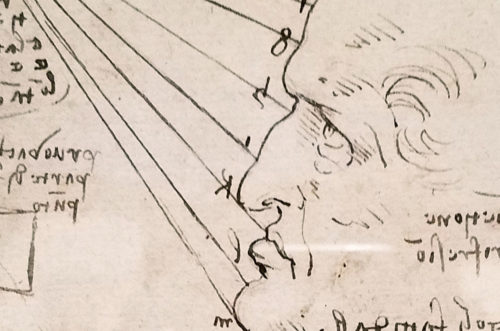
Queen’s Gallery, London

Fifteen years ago, I read ‘Flights of the Mind‘, a superb biography of Leonardo da Vinci. For a fresh grad student (re)starting her career, it brought me to my knees – partly due to its physical heft, but moreso due to its humbling reminder that “greatness is not born but made”. The book illustrated in fascinating detail da Vinci’s tireless toil, the thousands of hours in pursuit of perfecting his craft.

Yesterday, I stood in a room with hundreds of da Vinci’s drawings. These drawings were never meant for public consumption. They were his private observations, notes, calculations and ruminations for his work. The copious (bordering on obsessive) studies of facial profiles, human anatomy, drapery, light and shadow, water movement, women’s braids, horses, etc were proof of the book’s assertion that behind every masterpiece were endless hours of examinations and analyses. With these came all forms of trials and errors (for example, his initial sketches of human proportions before his Vitruvian Man).

In these drawings, it was made evident where genius lies – in the hard work. In the thousands of hours of practice. In the rising above the rough sketches and failed theories.

And so again, 15 years hence, da Vinci brings me to my knees. This time, he picks me up from the floor where I’ve been hanging out on my back, staring ceilingwise, and indulging in self-pity over lousy first drafts and directionless projects. For someone (re)(re)starting her career, this was a nice slap on the face to get back on my arse, and put in the hours and practice. Because if the Genius OG Renaissance Man had to do it, I certainly have no excuse not to.

#daredtoputleoandmeinthesamesentence #foreverfan#leonardo #davinci #lifeindrawings
Taming the Beast

By wingwmn · Follow: InstagramJuly 14, 2019

It’s been 2 years since I quit my corporate job. So far, so good. I finally have time for travel, for family and friends, for a healthy relationship, and for creative pursuits.

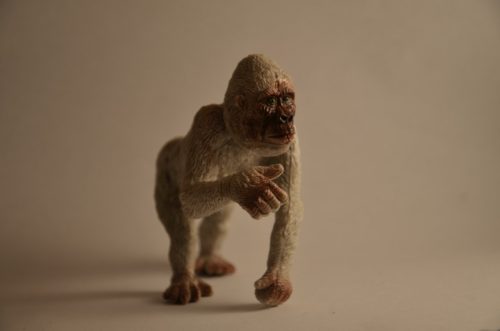
And yet, my monkey mind, a term used for the mind’s constant chatter, can’t seem to leave well enough alone. Recently, it’s been bouncing off the walls, blathering on: It’s time to make money! You’re not just dipping into your savings, you’re canon balling into it! … Or Obsolescence! The longer you wait to get a job, the more irrelevant you’ll be! … Or Lifestyle! How are you going to pay for what you want?!    This monkey has one, and only one, thing on its mind: money.

The buddhists’ response to the monkey mind is to meditate the monkey away. Not so easy when it comes to the money monkey. This particular one is a beast! It dictates how we live and prevails on our happiness. We hear it all the time: I hate my job, but I need to keep making money. . . I could be happy, but I don’t have the amount of money I thought I’d have by now.

Sure, we need to accrue money to live comfortably. When we’re hungry, the money monkey is there to help us: Accumulate! Survive!  It would serve us well to pay heed. But there comes a point, once we’ve made enough to provide food on the table and a roof over our heads, that money becomes a decision. This is the point when we can reclaim our power from the monkey and decide how to balance out the pursuit of money with actually living. Endless accumulation, despite the monkey chatter, does not have to be the default.

Of course it’s easier said than done. While meditation and mindfulness might get us some way to silencing this fear-monger, wresting back our power from the quantitative and practical money monkey needs an equally logical and rational approach. Two years ago, I went through a very deliberate and analytical exercise. It helped quiet the mind chatter then, and continues to help foster a proper relationship with money today.

First, Know What You Have

Having a clear picture of my financial position is a powerful tool for calming the monkey’s fear of a cash shortage.

Before this exercise, I had an impressionistic picture at best. I kind of knew where my assets were, had a vague idea of what I was saving and spending, and had no idea what I was invested in — I entrusted my financial advisor to do all the thinking on that.

When this uncertainty got too unbearable, I decided to finally take a hard look under the hood. I cleaned up the mess I found — closed dormant accounts, consolidated money into a few strongly-rated banks, and got organized with online statements and passwords. I calculated my savings, analyzed my monthly expenses, fixed leaks (such as auto-payments for online subscriptions that I didn’t use), and got an appreciation of my cash runway (that is, how much time my savings could afford).

I also fired my financial advisor (after realizing the fees I had been paying him all this while!), and took control of my investments. I read personal finance books and blogs, and educated myself on investment options. I set myself up so I bought only what I understood, and what was in accordance with my risk tolerance and plans. I set aside cash for a rainy day and bought insurance to cover certain unmitigated risks. I revisit my positions semi-annually. All very simple. All monkey-pacifying.

Second, Know What is Going on Around You

Being aware of this ever-changing world and understanding where I may fit in appeases the monkey’s fear of obsolescence.

I spend a lot of my time walking around, listening to podcasts, browsing bookstores, checking out new products, and talking to people. I observe what people are currently doing, thinking, and buying. I take note of trends, of unmet consumer needs, and of industries being disrupted.  Engaging in these activities keep my mind active in forming ideas (silly or otherwise). Then I draw up a list of these ideas for business opportunities or personal projects. I brainstorm with family and friends. Some of these ideas, I try out; most of them don’t see the light of day.

I also spend a good chunk of my days learning new skills. I try new design software; I code (poorly); I write (sometimes).

None of these I do for a specific purpose. I don’t expect to be hired as a programmer, for example. Nor do I brainstorm to finesse business concepts for execution. It’s simply about being curious, keeping mentally nimble, and watching where it all leads. And it assures the monkey that I am ready to hit the ground running when the opportunities arise.

Most importantly, Know What Is Enough

Knowing What is enough for me? is key to dealing with the monkey’s demand to keep up with Joneses.

For better or worse, I’ve always had a strong sense of my “luxury spectrum”. As a Taurus ruled by the goddess of beauty, I require a minimum level of comfort — a clean cozy space in a culturally thriving city, healthy food, a few nice things. Anything more than that, I have a lot less interest for — I never cared for the seat upgrade, the “it” bags, or a massive wardrobe. So, when the monkey sees what others have and points out: You need a job to make more money so you can buy the big house, and several vacation homes, and club memberships, and beautiful jewelry, and. . .and . . . and, I dig in and firmly remind it:

I have everything I want right now. I have time for travel, for family and friends, for a healthy relationship, and for creative pursuits. I have a space to feel at home, fresh food, and a few nice things. This is luxurious living. This, for me, is enough.

Thank you for your concern, money monkey. Now, please be on your way.


Photo by Walter Sanchez Martinez from Pexels

Daisy Says

By wingwmn · Follow: InstagramMay 14, 2019

From her, I learned Math (“Calculate it: ingredients cost, plus electricity cost, plus opportunity cost. . . SO MUCH CHEAPER to buy the cookies.”)

And Economics (“Always leave the party early. The less they see of you, the higher your value.”)

And Sex Ed (“Your dad threw his jocks at me, and I got pregnant.”)

And Marketing (“When you first meet a guy, don’t talk about your over-education.”)

And Religion (“He may look like an angel, but if he can’t put food on the table, he’ll quickly look like the devil.”)

And Interior Design (“The secret to a happy marriage is separate bathrooms.”)

And Career Planning (“Life goals? I had none. I just wanted to get you guys educated and have lunches with my friends.”)

And History (“During my time, we never looked for Mr. Perfect.  We just got married, and dealt with the consequences later.  Stop looking for Mr. Perfect!”)

#happymothersday #daisyschooloflife #besteducation

Observations on Itchy Feet

By wingwmn · Follow: InstagramMay 10, 2019

In an attempt at organization, I’ve collected little travel observations that I’ve posted on social media and brought them here to the blog.  This way, I can more expediently answer life’s hard questions like, “What did I think of Iceland again??”


Paris, May 2019

Yesterday, dear Carina and Vic renewed their wedding vows in Paris. It was as moving a ceremony and as gorgeous a day as Paris commonly bestows on lovers.
But something was beautifully conspicuous about this celebration. For Paris, the City of Love, with its hazy atmosphere, nostalgic musicians, glowing lamp posts and cobbled streets, naturally celebrates the excitement of new love. Every corner exudes the sweetness of budding romance; of flirtation and seduction.

And here we were, celebrating not the heady beginnings of a love story, but the oft-glossed-over middle part. The trivial boring bits of “happily ever after” — dirty socks on the floor, romance-zapping stomach bugs, banal finance issues, incompatible travel-planning habits, in-laws.

“It’s a very different experience walking down the aisle knowing EXACTLY what you’re going in for,” Carina said, “and still saying yes to all of it.”

Yesterday, we celebrated not the stuff of Parisian love stories, but the full-on real story. The unedited middle part — of which without the plot twists, gory scenes, and battle-scarred heroes, there is no story.

Carina and Vic, and all the heroes of the middle part, i take my beret off to you. Big love.

*

Budapest, April 2019

I’m not going to lie. I’m not rushing back to Budapest to dive into her traditional goulash. Or her national dish of chicken paprikash. Or even her schnitzel. I don’t think I’m alone in this. If we werent raised on these dishes, we wouldn’t be dreaming of them the way we do a rich carbonara or a comforting cassoulet.

And this is precisely the reason why I think Budapest’s food scene is hopping. HOPPING! Aside from the fact that streets are teeming with all sorts of international cuisine, there is, more notably, a remarkable range of “modern” hungarian restaurants: from fine dining (there are 4 michelin star hungarian restaurants in the city) to creative street food.
Walking the city, it will be readily apparent that the innovative food culture is disproportionately much larger here than in the established culinary meccas of France, Italy or even Spain. And maybe that IS, in fact, the curse of having rich terroir and a celebrated gastronomic history – modernization is slow to come by and any is met with all sorts of resistance. The world does not want to see change on the tightly-held traditions and recipes of these culinary giants. We all come home or visit to taste the cannoli that great-great-great nonna used to make. Or the croissant that’s been fed to the kings since 1567.

Meanwhile, due to an absence of an illustrious culinary past, young Hungarians are free to, or even urged to, revolutionize their national cuisine on a steady clip, bringing in outside influences and creating something interesting and exciting and relevant. It all feels a little bit like London’s culinary story. Or do i dare say, even Manila’s. Some experiments in this city are more succesful than others; but overall, an interesting, dynamic, forward-looking, and globally-aware food culture is simmering aaaall over this town. And that, I would come back for.

*

Madrid, April 2019

I like to think of myself as a seasoned and shameless solo diner. I have zero hesitation eating alone. In fact, I welcome it. I don’t do books or phones; I sit back, enjoy the experience, and stare down anyone throwing pity looks. More often than not, I find someone to chat with.
Since my first solo dining experience in Spain almost 25 years ago, i STILL maintain that this country is the most difficult place for solo diners. Particularly if you like to forego the more civilized sit-down restaurante experience, and choose to tapa-nibble your way through old school local tabernas, bodegas or taperias. There’s a certain attitude required to elbow your way to the bar, get the busy hombre’s (who knows everyone in the bar except you) attention, attempt 2nd level spanish at deciphering the difference between a tapa and a racion, ignore shrugs or mumbles suggesting that you stop asking stupid questions and just get on with it, tuck into your order which will invariably always be awkwardly too much, and know, while standing amidst large groups of friends in animated conversation, that there will never be an opening for you to join in on any of them. Then, you take a deep breath and muster it all again at the next stop.

What I once thought was hostile behavior, I now realize is just IS. The Spanish are not vigorously welcoming to outsiders. Only when you get to befriend them do you feel their warmth.
So meanwhile, I suck it up, dust off and keep doing it. Because even just a simple tosta of manchego drenched in their divine olive oil makes it all worth it.

*

El Nido, Feb 2019

Living on an outrigger for 5 straight days forces an internal reckoning: CAN YOU LEARN TO EMBRACE YOUR INNER COUNTRY (OCEAN) MOUSE? And in the middle of paradise, I said NO. Museums, cafes, mass transit, urban maps, rude people, noise pollution — these are, admittedly, the stuff of my happiness. So while everyone around me swam with turtles and clown fish and sea cows, I stayed (mostly) dry with the most adorable 13-year old (who, ironically, is a competitive swimmer but is equally unimpressed by the water) and learned the rubik’s cube. Win-win-win!

*

Turin, October 2018

Turin: Roman-style narrow cobbled streets, laid out in the New York-style grid system, opening up to Paris-style grand piazzas and avenues, peppered with Vienna-style art nouveau coffee and chocolate shops, layered with Berlin-style fascist architecture, mushrooming with global hipster instagram-style cocktail bars, inhabited by culturally-proud but lovely and generous people all its own. #tryingtoputafingeronit #torino #italy

*

Vienna, Plachuttas Glasshaus, July 2017

I very rarely order meat, and I’ve never sung its praises. But because I cannot adequately describe Vienna’s jaw-dropping architecture, I will instead talk about lunch. My Austrian brother-in-law told me I had to try the Tafelspitz in Plachutta. I asked what it was. He said, “boiled meat.” “Ugh,” I grimaced, then called for a reservation. … So, Tafelspitz. The dish comes to you in a big, bubbling, copper cauldron of meat, marrow and root veggies. Sides of roasted potatoes and creamed spinach accompany the pot. Tafelspitz is to be eaten in three courses, somewhat like Peking Duck served three ways. First, you ladle out the beef broth and the root veggies into a bowl. Enjoy them with what looked like egg noodles pre-dumped in the bowl. Next, you take a bone from the pot and savor the marrow spread like jam (or heaped on like mine) on rye bread. Third, you inhale the melt-in-your-mouth beef with horseradish sauce, apple sauce, the roasted potatoes, and the spinach. Then you think about this lunch for months to come. Moral of the story: if you want to go all highfalutin Austrian, buy horseradish sauce and annoyingly serve your Nilaga in 3 patience-testing courses. #solodininginvienna#architectureisthebomb#proteinrequirementsmet #delish

*

East Village, Manhattan, July 2017

Hipster overheard: I’m changing people’s lives because I’m helping them with content strategy, so they reach everybody, y’know?
Oh east vill, you’re so special. #sundaywisdom #nojudgement#doyourthing

*

Harvard Business School, Boston, June 2017

I joined my dad at his 50th reunion. I witnessed the surfacing of his american accent 😂, listened to stories from his former roommate, and heard them reflect on their careers and lives. From a school that churns out the biggest captains of industry and government, these were some of their insights:

Don’t delay your happiness: “Be careful of the myth that if you do everything right – you get in good schools, you get a good job – you’ll be happy ‘in the future’ “.
Don’t be rigid with your plans: “Be open to the shifting of context, the shifting of cultures. I would never have guessed then that I’d end up where I am now.”
Don’t let anything other than your happiness dictate how you should live: “Know who you are and be true to yourself.”
Pause consistently: “Take time to reflect.”

*
Iceland, May 2017

I’m an urban traveler through and through. Give me traffic gridlock, smog, dogshit and rude people any day, as long as they come with some culture and interesting cuisine. Iceland met none of my criteria. There are exactly 6 buildings and 2 cars in the entire country; the people are too nice; there is no edge to the place; and the food doesn’t stand up to their atrocious prices. AND YET, for its strange, eerie and awesome terrain, Iceland deserves some respect. #bow#thelittlecountrythatcould#arayangmahal

*

Dublin, May 2017

My brain making sense of the scene while walking around Dublin: “Whoa the Irish pubs are packed today. St Patrick’s Day? …. oh wait, that’s right, I’m in Ireland. It’s like st Patrick’s day everyday… and it’s where Irish pubs are just called ‘pubs’.” “I don’t understand anything they’re saying … oh that’s right, I’m in europe… oh wait, that was English.” #compused #confused#foundthenicestpeopleintheworld#dublin #friendschineserestaurant

*

New York, May 2017

Home for a tune up, dietary reset, and laundry. Feels a little disorienting to suddenly understand 100% of every conversation around you. Must be why some of the hearing-impaired choose to forego their hearing aids. Because sometimes, you’d rather not know. #greatestcityintheworld#greatestboroughintheworld#jetlagchronicles #brooklyn

*

Rome, May 2017

Sora Margherita – a tip from our painfully-hip host two years ago. This place isn’t hip, though. It’s a hole in the wall marked only by random red rope curtains. It houses two very memorable things that brought me back yesterday: (1) scrumptious Roman cuisine, and (2) a purple-haired, thick-eyelinered, non-English-speaking dictator of a server who may or may not (a) veto your order of a salad and instead fix you a plate of vegetables that will be the best plate of anything you’ve had in a long time, (b) interrupt the conversation you’re having with the next table to remind you to “Mangia! Mangia!”, and (c) literally force feed you any carcioffi alla giudia left on your plate. #iloverome

*

Rome, May 2017

On the train into Rome, I sat behind 2 Italian women. They were panicking that they had not validated their tickets, and if caught, would have to pay a fine. True enough, the conductor arrived, looked at their unvalidated tickets, cluck-clucked, tsk-tsked, shook his head and charged them 50 euros. “Ma, signor, per favore… ” A 5 minute animated negotiation ensued. He then scribbled on their tickets; they breathed a sigh of relief and thanked him profusely. He then turned to me. I handed over MY unvalidated ticket. But since I didn’t have the vocabulary for ticket validation negotiations, I smiled at him and gave two half bows. He looked at my ticket, smiled, handed it back to me, and moved on.#ownyourasian #iloverome

*

Rome, April 2017

Because I’ve been so deprived of niceness the past couple of days, when the train conductor answered my question logically AND THEN asked me how I learned to speak Italian, I almost asked him to marry me. #loverome #happyagain

*

Venice, April 2017

“Wow, the Venetians reeeally don’t like tourists, huh?” I told a local. “Pffff,” he said. “You have to understand, there are 60,000 tourists that come to the island every single day. There are only 50,000 of us residents. Yesterday, I went to the supermarket, and the tourists bought all the eggs!! No eggs in the store!!” Friends, if you encounter Venetian rudeness, don’t take it personally. Remind yourself that they are just protein deficient. #lastrantonvenice

*

Venice, April 2017

I swear it takes a certain type of smarts to navigate Venice. Case in point: a typical Venetian address would read like “1304 Cannareggio”. That’s equivalent to “1304 Makati” or “1304 West Village”. So you are expected to get to the neighborhood and figure it out?? Whuddufudge, Venetian urban planners of yesteryear? What happened to user experience design? When designing a product, you’ve got to take into account all potential customers — including 21st century tourists from nyc who can’t operate outside of a grid system. Instead, you’ve produced a city that has become like all things (or persons) good looking: confusing and frustrating. #ohyesiwentthere#dontmakemethink #lovehatevenice#cantgetoverhowlostiwas

*

Venice, April 2017

Venezia travel tips: (1) when planning a visit to Venice, plan on going when it’s cold, wet, and dreary. Zilch swarms of tourists, zilch lines into museums. The cold, wet, dreary city will be all yours. (2) Swarms or none, accept that you WILL get lost. If you ask a local for directions and he starts with “It’s easy… “, run away. Because the street on which he tells you to turn left will be a bridge, and the second bridge he tells you to cross will be a lagoon. (3) Do not have multiple aperol spritzes to settle the frustration of being lost, particularly when you know you are on the opposite side of the island from your hotel. Because you will NEVER get home. (4) If all else fails, look for a vecchia signora Italianna who would rather walk you across the girth of the island to get you home than figure out your map.#emptyaccademia #tintorettoithi k #stmarkfreesaslave

*

Venice, April 2017

Why did it take me over 20 years to return to magical Venezia? Instead, I wasted waaaaay too much time in Manila’s Venezia bar. So not the same. At least in the former, the liquid involved creates beautiful memories.#youthiswastedontheyoung


A CALL TO (SEMI-TONED) ARMS

By wingwmn · Follow: InstagramApril 15, 2019

It’s my birthday month, and I can be as superficial as I want to.

***

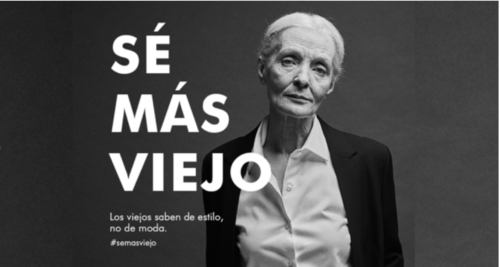
Last year, I was on a family cruise that rounded the Iberian peninsula. In Malaga, while walking through the main shopping street, I was stopped in my tracks by an ad of this woman posing for a Spanish clothing brand. I stared. I was so enamored by her silver hair, her bare face, her lines. I took a photo for keepsake. I am going to be like her one day, I thought. Audacious, bold, unapologetic about aging.

As I walked on, I caught a glimpse of my own reflection. I grimaced at the hypocrisy of my thoughts. Because just the day prior, searching for something to do in the ship, I attended a talk called How to Look 10 Years Younger. I expected to hear the same tips spouted by every wellness professional: eat well, drink green juice, exercise. Instead, what I heard were unfamiliar words: dysport, restylane, thermage. I half-listened; these were injections and other what-nots of intervention, apparently, to “refresh” one’s face. I glanced around the room — women in their 60s and 70s asking lots of questions. I politely waited; I didn’t want to be the smug 40ish-year old who snuck out early.

At the end of his talk, the doctor offered a free consultation to each of the participants. Why not? I thought. I have nothing better to do.

“Just here for the free consult.” I shrugged, unsure of where to take the conversation.

He asked how old I was. Then he took in my face. He said, “Congratulations. If it weren’t for your forehead, I would never have guessed you were in your 40s.”

I was mortified. Echoes of forehead . . . forehead rung in my ears. I couldn’t fully focus on what he said next, “Dysport. . . just a few units . . . will subside in a few months.” “Let’s do it,” I blurted, faster than he could say 20% discount.

After that incident, and as I burrow further into my 40s, I’ve been thinking a lot more about aging. About how I’ve been cowering from it; how I’ve been almost embarrassed by it. How I practically judge myself for it, like aging is an illicit thing I shouldn’t be doing. Sure, I treasure the metaphysical benefits of aging — the wisdom, the confidence, the self-assurance that comes with it. But I still cannot, for the life of me, fully relax in the fact of aging.

Academics have long talked about how happiness through adulthood is U-shaped: that it declines through our 20s and 30s, hits the absolute shit pits (ok, not in their words) in our 40s, then finally curves upwards when we turn 50. From this vantage point (which is at the theoretical rock bottom of this curve), I cannot disagree. The 40s is a moment of potent transition for a woman; a sliver of time sandwiched between youthful good looks and its corresponding promise on one side, and post-menopausal acceptance and contentment on the other. We, women, don’t consciously delight in this phase. Rather, we hunker down and just get through it. If we had it our way, we’d stay in our 30s until enough pressure builds up to catapult us straight to 52 where the trajectory of happiness is infinitely positive.

I think a large part of this unsettledness has to do with how we start to look. The nuances of physical alteration in our 40s and how it impacts our happiness deserves its own commentary that, I feel, hasn’t been given its due place in the dialogue of human development.

A key aspect of being in this space is the abruptness of it all. Without warning, there is this sudden disconnect between our mental and physical states. Our brains haven’t registered that we’re out of our 30s omnipotent phase; our bodies, on the other hand, have very well moved on. Our minds are zeroed in on the high-waisted jeans; our waists are saying not a chance. Our eyes are zeroed in on the good-looking stranger; our mirrors are saying could be your son. We sprout whole sections of gray overnight. A subtle layer of softness has sprung over yesterday’s toned arms. Last week’s cheekbones have plunged into the jowl area.

To add insult to injury, our bodies refuse to cooperate as it did just a few years ago. It’s become like driving a car with a loose wheel — we can try to steer it towards a certain spot, but there are no guarantees we will get there. Only recently, if we gained weight, a little starvation here and a few laps there would make things all better. Now, a little starvation here and a few laps there triggers the stress hormone called cortisol to be released into the blood stream that subsequently causes fat to accumulate in our bellies and stay there for ever and ever no matter what you do guddamit amen.

In case we think we may be imagining things, a daily stream of microaggressions confirms our fears. Our sisters tell us that the fancy earrings we’re wearing are “too young”. Strangers mistake our 28-year old sister to be our daughter [editor’s note: @*$%!!]. Our doctors remind us of the fermenting of our organs; that we should start with the mammograms, accept our eggs are “mature”, read up on implications on fertility, start thinking of alternatives, and hurry hurry hurry!

Equally as troubling to these verbal assaults, particularly for single women, is that we suddenly cease to exist. Being in bars, parks, the subway — basically, anywhere we used to meet men — becomes tantamount to being a woman in a gay club: NOBODY is checking you out.

If managing this physical transformation is difficult, managing it in this age of social media is a nightmare. With the pervasiveness of selfies, we are losing our collagen at precisely the time being photogenic has become vital. Dwarfed underneath the tsunami of camera-ready millenials, we could be ushered out of relevance far quicker than any of the generations before us.

And so,

this is where I call out to The Sisterhood.

We can let the 40s beat us back into hiding. We can deny this time, cower from it, or be embarrassed by it.

Or

We can link arms and stand our ground.

We can claim this special, extraordinary sliver of time as a thang and step into it with boldness and purpose.

We can acknowledge it in our conversations and share stories, to remind each other we are not alone.

We can be the biggest cheerleaders of our trailblazer sisters who choose to go natural and celebrate their grays or their laugh lines. They’re the equivalent of the girls in 5th grade who wore bras first and gave the rest of us the breathing room to finally wear ours.

At the same time, we can also accept the various choices of others and understand we are all just doing our best. (read: we can be gentle with each other when, in a moment of weakness, a sister gives in to dysport.)

And we can learn to audaciously and unapologetically love the changing bodies that we are in. Keep them healthy and the best version of themselves at this age — all while mothering our tween and teenage children, daughtering our ailing parents, managing our homes, and captaining our industries. This way, we can show the future generations that THIS is what the 40s looks like, and we will have you know, that it is hashtag-guddam-beautiful.


***

I would love to hear your thoughts.  Please comment in the section below.

You can also subscribe here for the latest updates!

The Tao of Tong

By wingwmn · Follow: InstagramMarch 8, 2019

This was a tribute to my Dad during his 80th birthday party.

*

Good evening.  We are delighted that you are with us to celebrate Dad and his 80 years.

By way of introduction, my name is Ani.  I am number two of the five children of Tong and Daisy; first daughter of four girls.  Somehow, this placement in the pecking order has bestowed on me the honor of imposing on you our entire family album.


*

As most of you can imagine, Dad was quite an unconventional father. It is rumored that he wasn’t at any of our births; he surely never changed our diapers; he was never involved with our school work; and he attended a total of two parent-teacher meetings (and that was cumulative for the 5 of us). Having said that, in his own way, Dad always made his presence felt and always made us feel loved. So, for those of you concerned, the kids turned out okay; no pyschological scarring because of Dad. (Because of Mom, on the other hand, that’s a different story that we’ll save for another day.)

*

Personally, I’ve always looked up to Dad. Whenever there were college essays that asked for the person I most admired, my answer would always be Dad. Not only because he was successful in both the private sector and the public sector, both venues in which he touched many lives, he is also the wisest person I know.

I wanted to be like him so much so that I deliberately patterned my life after his. Mom wanted to send me off to some far away boarding school, but I said no. Dad went to Ateneo and studied Economics; so, I went to Ateneo and studied (Management) Economics. He graduated cum laude; I graduated cum laude.

My life unfolded as expected — pretty much like Dad’s. I spent time in the private sector, did some public policy work . . . only to find out decades later that Dad had absolutely no intention of studying at the Ateneo! He was on his way to the University of the Philippines to register for pre-law, but got off on the wrong stop and ended up in Ateneo!

So basically, my entire life was patterned after an accident.

*

Whenever I find time with Dad, I try to tap into his wisdom and ask him the most annoying questions.  Like, what is your biggest regret? or Dad, when you were a young parent, were you ever anxious about money? or What was your midlife crisis like?

Dad is always willing and ready to reflect. He’ll pause, sit back, and think. Then invariably respond with the most unsatisfying answer: No, no regrets. No, never anxious. No, no midlife crisis.

*

We also often talk about the arc of his life and the events that led him to where he is now: an entrepreneur.  If he is not with his grandchildren, he can be found in the school in Bataan he recently founded, the University of Nueva Caceres – Bataan. Or in Sinagtala, his adventure resort in Bataan.

*

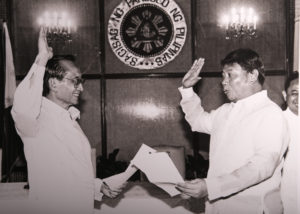
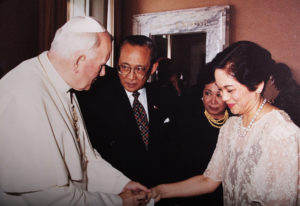
One of the big turning points in his life was in 1986 when his beloved brother, our Tito (Uncle) Pito, was killed for political reasons. This is what prompted Dad to think about public service — to honor Tito Pito and to ensure that his death was not in vain.

A few months later, I remember mom crying (and mom never cries) and threatening to pack up the children and move to the US if Dad entered politics.

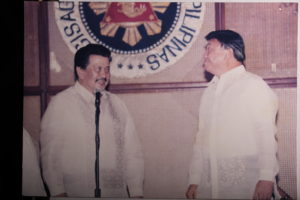
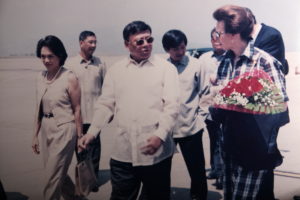
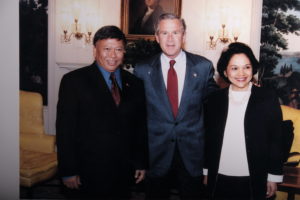
So, what did Dad do? He entered politics. First as Congressman in 1987 under Cory. He then went on to serve under 4 more presidents — Ramos, Erap, Gloria and PNoy.  He was Congressman until he reached the 3-term limit (he ran unopposed in his third and last term). Then, he was appointed Chairman of Subic Bay Metropolitan Authority (SBMA), and later as Chairman of the Bases Conversion Development Agency (BCDA).  In government, his hallmark pursuits were education, job-creation, and infrastructure.

And meanwhile, what did Mom do? She milked this Congress thing and had the time of her life! She embraced her inner fangirl and, and found some of her closest friends.

*
A series of unfortunate events involving cheating scandals led Dad to quit politics in 2013.  I asked him if he was upset, and he simply said “No.  This is an opportunity for me to focus on projects I’ve always wanted to do like build a school.  Or an eco resort.”

*

One day, while Dad and I were waiting for the rest of the family to mobilize for Sunday lunch, I asked him one of my annoying questions: What is your greatest happiness now?

Without looking up from his book and in all seriousness, he answered, “Spaghetti vongole.”

And then it hit me.  I then finally understood the wisdom of Tong Payumo.

The way he lives his life reminds of me of what author E.L. Doctorow said about writing. When he sets out to write a novel, he doesn’t have a plan. Each chapter reveals the next. It is “. . . like driving a car at night. You can see only as far as your headlights, but you can make the whole trip that way.”

This is how Dad lives — bit by bit, moment by moment, chapter by chapter. He concerns himself only with what he can see in the headlights — whether it be getting lost on his way to school, dealing with a family tragedy, dealing with a headstrong wife, facing political challenges, or planning for Sunday lunch. He never worries about what is too far ahead. This way he can adapt, change course with life’s uncertainties, and reinvent himself over and over again.

And this is the secret as to why he has had no regrets, no anxieties, and no midlife crisis.

*

Happy happy birthday, Dad. Thank you for your wisdom.

Unloading

By wingwmn · Follow: InstagramFebruary 5, 2019

Call me a biatch, but I have issues. With conceivably the nicest little girl in the world. Who is bestowing life changing magic all over the planet.

You’ve probably heard, just by being on earth, about Marie Kondo. Her book, The Life Changing Magic of Tidying Up, has helped millions of people declutter their homes and find everlasting joy. Aside from making it to Time’s 100 Most Influential, she has been called a “cultural phenomenon”, has a TV show that has gone viral, and a name that we now use as a verb.

About 4 years ago, I embarked on the path towards minimalism. I have since let go of over 80% of my stuff. I will attest to the fact that simplifying your life has numerous benefits: it gives you more time for what counts, saves you money, reduces stress, and all that jazz. But Kondo’s method of getting there isn’t sitting well with me.

Her method espouses a few basic principles: Discard everything in one big event (in one weekend, or over a few days). Once you do it, you’ll never have to tidy up again.  Only keep things that “spark joy”.  Sure, her method may be effective in getting to the destination. But, I think it falls short of taking full advantage of the rich, rich journey that can be had if the purging process was done a little differently. Let me explain (and offer up some alternative tips, for whatever they are worth).

Kondo Principle 1: Discard everything in one big event

Forget the basic question of who has time to dedicate full days to one project?? Letting go of our possessions is hard enough; being forced to make tough decisions on each of them NOW is highly stressful. It’s emotionally draining, burnout-inducing, and frankly, simply unnecessary. What’s the rush? If the goal of purging is to find joy and peace in our lives, why start the journey in agony? Why not wade in gently and organically?

wingwmn tip # 1: Set aside a couple of hours on a weekend to begin. Enjoy the process, turn up the music, and pick one area of your home to tackle. Some obvious places would be your wardrobe, bookshelves, kitchen cupboards, or medicine cabinets. First, discard the low-hanging fruit, aka the junk: old clothes, outdated clothes, clothes you’ve outgrown, worn out shoes, expired medicines, ineffective creams, fragrances and shampoos that don’t suit, expired food in the cupboard and fridge, instruction manuals for things you no longer own, destroyed gadgets. When you feel you’ve finished with one area, move on to the next. Do this for half an hour, an hour, a couple of hours a day whenever you can. Remember, you’re not looking for perfection. Just enough to feel like you’ve cleared out the trash.

Kondo Principle 2: Once you do it, you’ll never have to cull again

With her “one and done” mentality, Kondo ignores the reality of self-evolution. We are constantly in flux — our needs change, our desires change, our identities change. Or on an even more mundane level — we switch jobs, we mature in our fashion sense, we get tired of things. If we want our homes to continue to be our sanctuaries, our possessions have to change with us. Regular reassessment of our belongings is not only nice. It is necessary.

wingwmn tip # 2: Return to the areas of clutter in your home often (once a quarter maybe?). See if there are other things that you are able to discard. In this process, you’ll notice your critieria changing, and that you’re able to discard increasingly meaningful objects. From culling for junk, you’ll be able to parse more carefully and let go of the beautiful pair of uncomfortable shoes you never ever wear. And then, the Lladro your grandmother gave that is at odds with your midcentury modern furniture. And THEN, the trophies and medals you once thought defined you. 

wingwmn tip # 3: To keep motivation levels up, it is important to move items out of your home as soon as possible. Know where you can throw, donate, or sell your items, and execute as soon as possible. The observable sensation of having less stuff and more room (rather than heaps of filled bags cluttering the hallways waiting to be taken out) will instantaneously make you happier and keep you going back for more.

By purging slowly and intentionally, we allow space for self-discovery. As we return to areas again and again, we notice an unclenching. A diminished dependence on stuff to feel secure. A maturity to view things as they are: just things.

Kondo Principle 3: Keep only that which sparks joy

Many issues here. First, the criteria to keep things that “spark joy” is vague. I can stare at my rice cooker all day and will still not arouse any emotional response to it. The criteria is also misleading. My tax returns surely don’t spark joy. Should I discard it (and spark all the joy out of my accountant)?

Second, the happiness we derive from inanimate objects is fleeting. Any depressed person who has had to resort to retail therapy will understand. So, what do we do when our things no longer spark joy? Cull again, you say? See Kondo Principle 2. (I rest my case, thank you.)

Third, the criteria is weak in averting future accumulation. If I am allowed to purchase that which sparks joy, what is going to keep me from buying the entire Moleskine store?

Most importantly, scrounging around for things that bring us joy builds a psychological dependence on inanimate objects for our emotional well-being. It empowers the object to control us; to do something TO us. If that object is lost or destroyed, we become distraught. Alternatively, if we change the criteria to keep only that “which we use”, we hold the power. Our happiness is rooted in ourselves. Possessions are managed; our environment yields and transforms in accordance with our evolution.

wingwmn tip # 4: Keep only that which is “useful now”. Useful. Now. That is, have I used it recently? Will I use it soon (and not in some future theoretical costume party that I haven’t yet been invited to)? Some suggestions:
• Books: keep only the reference books you return to often. How likely are you going to reread the novels? Not? Then discard.
• Clothes: Discard anything unworn last season.
• Kitchen tools: Discard rarely used gadgets and utensils (like the ice cream maker you used once in the summer of ’06. Or the corporate mug you swiped just because.)
• Redundant things: Discard the second bread knife, the third pair of scissors, the fifteenth table setting.
• Things that can be found online: Discard anything that can be found online such as gadget instructions (hello, youtube), CDs and DVDs (hello, spotify and netflix), travel guides (hello, google, yelp, tripadvisor, etc)
• Forgotten things: Discard anything to which you’ve exclaimed, “Oh I forgot I had this!” You didn’t miss it; you won’t need it.
• Virtual-izable things: Discard anything that can be placed in a hard drive or the cloud, such as photos and business cards (but um, copy them first).

A slow and intentional process of purging — one that respects our unfolding and does not wrest possessions from us before we are ready, one that does not cede control of our happiness to things — ultimately reveals a deeply-rooted and self-aware version of ourselves. With the ability to watch our own personal evolution, we better know who we are and what sparks in us real joy. Then, we can take this self-truth and apply them in the environments in which we place ourselves, in the thoughts we allow, in the things we say, and in the relationships we hold.

Four years in and I humbly acknowledge that tidying up is truly life changing. I’ll give Kondo that.


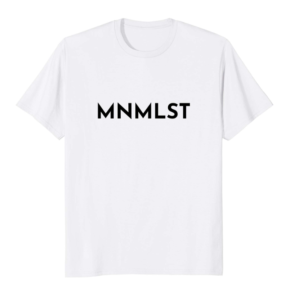
p.s. Speaking of purging, if you’d like to purchase a MNMLST t-shirt, click here or here.

I would love love to hear your thoughts!  Please comment in the section below.  

Midlife Strolling

By wingwmn · Follow: InstagramJuly 25, 2018

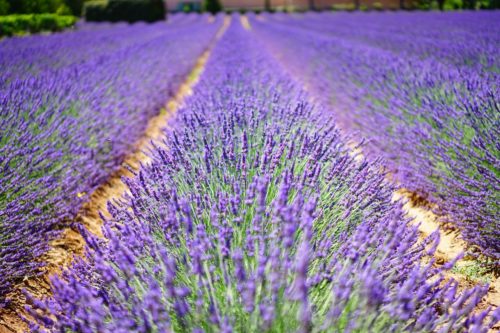
I just returned from a walk through the Provencal vineyards. I started the walk following a wide and well-trodden gravel path. Soon enough, I was venturing down the various small dirt roads that veered off course. I have all the time in the world, I thought. Why not? Some of the dirt roads were too uninviting to explore in full. Some led to dead ends. But some opened up to lavender fields, to quaint stone houses, to a river, or back to the main pathway. After the exploration, I returned to the hotel buzzing with a fuller appreciation of the village’s landscape.

Soooo with that, let’s talk about Dating, shall we?

A few days ago, I ended a relationship. The guy, for various reasons, was not of the typical mold of past boyfriends. “Off path”, if you will. But I was sufficiently intrigued by him, so we dated. It was a good few months — easy, enjoyable, drama-free. Circumstances were not right for a longer relationship, though, so it ended as quickly and as smoothly as it began. We talked, we agreed to disagree, and we parted as friends.

The absence of complications in this relationship was in stark contrast to my early dating years. All through my late-30s, my romantic story was a rom-com-horror show running on repeat: ditching perfectly good relationships and grasping on to bad ones; neglecting the good guys in favor of the bad boys.

To be fair, the pressure to find our Forevers before impending ovary failure would throw anyone into neuroses. Dating becomes akin to finding love in a factory. Our ability to discern becomes questionable at best. We force ourselves to decide on potential partners within a few hours of meeting based on their perceived capacity to charm us, make us laugh, hold clever conversations, keep their fingernails clean, make cute babies, and pay for said babies’ college tuition. If things (surprisingly) go past the first few dates, we clamp down on any wiggle room to turn back. We end up staying in unhappy relationships longer than necessary just to avoid starting the maniacal process over.

The two best decisions I’ve ever made occurred at the same time: I decided to turn 40, and to step off this insane train. I released myself from the pressure of marriage and children — rather than Must haves, they became Nice to haves. And immediately, the heavens parted, angels carried the weight off my shoulders, and the dating world transformed for me.

Dating became so much more joyful. And sane! When the objective of each date ceases to be To Find The One, we can fearlessly explore, wander off path on new dirt roads, and frolic for as long or as short as we want. That is the gift of Midlife dating — it becomes a series of mini-adventures to relish.

To be clear, when I speak of midlife relationships, I am not talking of the stuff of quick flings.  These relationships can be every bit as sincere, meaningful and enriching as any other. First, because marital union is not the foremost goal, people are together because they enjoy each other’s company. Period. Off-spring potential and tax implications do not enter the equation. As such, there is an inherent acceptance and respect of partners as they are. Rarely are there judgements (“can I live with THAT for the rest of my life???”) or attempts to change each other.  Rather, each person is afforded the freedom to fully be themselves.

Because midlife dating allows us the space to explore atypical unions, it can also help shift our patterns and open us up to new perspectives. It expands our concepts of love and relationships. They expose us to different types of love and help us determine what works and what doesn’t work for us. More importantly, they expand our understanding of ourselves. Believe me when I say, being intimate with someone very different from us has the power to change us profoundly.

Finally, when we stop relying on any one person to make us happy, we learn to take care of ourselves. We learn to guard our happiness fiercely, and entrust it only to the worthy. If a particular route threatens our happiness, we need the courage to turn around. Happiness becomes the key criteria in our choices — including whether or not to be in a relationship at any given moment. When we decide to be in one, we can bring into it our whole selves.

By embracing the gift of midlife and the options that come with it, we fearlessly venture further afield with open hearts, armed with the knowledge that we can respond with a certain maturity and level-headedness that midlife brings. And while venturing out without the pressure of Finding Forever, perhaps we will gracefully stumble upon it.

Or, we may find ourselves exploring for longer than expected. And I promise you with all my heart that that route is equally as lovely, like a stroll in Provence.


I’d love love love to hear your thoughts.  Please comment in the section below.

Bourdain’s Badassery

By wingwmn · Follow: InstagramJune 13, 2018

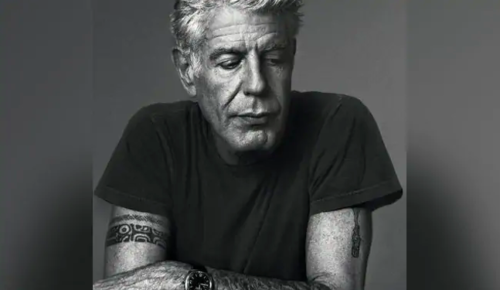
Whenever I am asked which famous person, dead or alive, I would choose to have dinner with, my answer is automatic: Anthony Bourdain. Without a doubt.

He has always been my compass for “cool” — a little bit due to his artful way with words; a little bit because he was very easy on the eyes; but a huge bit because despite his global influence and his iconic everybody-wants-to-be-him status, he never made it about himself. He insisted that his shows featured less footage of him and more on the people he covered — a metaphor for how he related with the world. His mental cameras were always turned outwards, away from him, fully celebrating his subject matter.  He probed and dug, seeking to understand, and to uncover the soul of their people.

Every week, in the pursuit of authentic stories and insights, he taught us how to LISTEN. That to reeeally do so takes a willingness to step outside our comfort zone and enter uncomfortable territory; to sit on the floor, squat or do what it takes to (literally and figuratively) start on equal footing; to put our phones down, break bread (or beer) and be fully absorbed in the stories.  To listen, Bourdain showed us, is to admit that we know nothing and to risk looking foolish with our questions; to suspend judgement despite our deeply held truths; and to be unafraid to admit we are wrong.

Bourdain proved time and again that when we listen, we reveal our shared human experience. He confirmed that in the most foreign of lands, among the remotest of tribes, there are people just like us: “The world is filled with people doing the best they can. Who love their kids. Who would like to put on a clean shirt every morning, to have access to food and water. Who hope. Just like everybody else.”  By doing so, he made the world a little bit smaller. A little bit friendlier.

This world he honored was hit hard by the news of his passing.  In this selfie-obsessed era when our mental cameras are constantly turned towards ourselves, when deep personal interactions have become so rare, we lost the last big breath of freshly self-effacing, irreverently generous, sweet air.

I am heartbroken that he took his life.  And dumbfounded.  In a roundabout way, it brought to mind a passage I had recently read — that when we regularly reflect on our death, when we deeply understand our own impermanence and become so intimate with our life’s fleeting nature, an internal upheaval occurs. Temporal pursuits fall away and the only true goals remain: love and knowledge.

I wonder if Bourdain often thought about his death. Could a secret familiarity with his own impermanence have influenced his enlightened existence? We’ll never know. But for all of us still reeling, perhaps a flicker of a consolation is that through him, we were reminded that humility, compassion and the pursuit of wisdom are still the ultimate badass.

RIP.

On Mother-Daughterhood: A Letter to My Goddaughters

By wingwmn · Follow: InstagramMay 13, 2018

My dearest Yanna, Lia, Soph, Lishi, and Mayari,

My mother was a very stern disciplinarian. Her eyes spoke a thousand words, and her screams conveyed what her eyes couldn’t. It was unambiguous when she was upset, and I dared not cross that line for (the ungrounded) fear of being put up for adoption.

She didn’t believe in idle time. She enrolled me in class after extra-curricular class — ballet, piano, organ, recorder, folk dance, acting, voice, tennis, gymnastics, horseback riding, cooking, baking, art. Name it, I took it. I wasn’t particularly passionate about any of the classes, but I diligently attended. At 8, I was busier than the Pope. I never objected.

Whenever she and Dad traveled, she left household management to me. By the age of 11, I handled a decent amount of cash, managed the marketing budget, did the groceries, and doled out staff salaries. I did as I was told. I never grumbled about it.

She governed my early-teenage social life, allowing me to attend 1 out of every 2 or 3 high school soirees to ‘give the boys a chance to miss me’. She dragged me to her parties to meet her friends’ sons. And yet, she was adamant about avoiding exclusive relationships because “you should be collecting for as long as you can!” [side note: patay tayo diyan.]. I generally complied.

My mom and I giggle about it now. I tell her, I need to see a therapist for mother-related trauma issues. She says, I don’t doubt it. You see, I was Mom’s first girl. (Like all of you, uncannily, are.) She was learning how to be a mother to a daughter as my childhood unfolded. And I, simultaneously, was learning how to keep her happy through obedience (most first daughters fall into this trap apparently).

My dear goddaughters, your relationship with your mothers is the most important emotional building block you will have. Its yield will go deeeep and looong affecting most of what you do into adulthood. So, it is imperative to mold it as consciously as you can.  With the benefit of hindsight, this would be my counsel:

Being a dutiful and obedient daughter will serve you well. It will prime you to earn good grades; foster a good work ethic; and learn responsibility, restraint, and discipline, all of which will form a solid foundation as an adult. With these, you will get into good schools, score some awards, land good jobs, most probably find good husbands. All well and good.

BUT BUT BUT here’s the thing. Many of the things that will really matter later in your lives, the great things, will require a certain bravery that is, unfortunately, not cultivated by being dutiful and obedient. Grander undertakings of pursuing happiness or accomplishing groundbreaking work require going against the grain, against what is popular, what is common.  Studying philosophy instead of medicine, calling off an engagement, standing up for a cause, proposing new ways of doing things, disrupting an old industry — all these require the fortitude to face dissenting opinions from parents, a partner, a boss, a moneyed lobby group; and the composure to keep on keeping on despite these. So, dear ones, while it is early, start getting comfortable with disapproval.  I recommend sometimes stepping away from the security of excessive deference, and acting based on authenticity without regard to popularity.

Aaaaall this to say, my dear goddaughters, I urge you to color outside the lines more often. Swim without sunscreen. Spit out that god-awful cod liver oil. Stay a little longer on Netflix. Leave food on your plate. Get that nose ring. Write a letter to your future goddaughters encouraging them to be naughty.

Sure you’ll be scolded. Sometimes big time. But if you are convinced it is what you need to do, and you can stand behind your actions, do it. And know that whatever it is you decide to do or not do, you will always always be loved.

Love,
Ninang

Would love to hear your thoughts.  Please comment in the section below.

  • « Previous Posts
  • 1
  • …
  • 3
  • 4
  • 5
  • 6
  • 7
  • 8
  • Next Posts »
© 2026
Design by SPYR