wingwmn

spreading my wings and sharing random lessons learned along the way

  • About
  • Life
    • Life
  • Curiosities
    • Design
    • Travel
  • Articles
  • Subscribe

In Defense of Solo Travel

By wingwmn · Follow: InstagramApril 27, 2018

Chiang Mai, Thailand.  Alone.

“What does a public tuktuk look like? I mean, as opposed to one belonging to a family? Do they have medallion numbers? . . .
And how do I know if one is available? Are they lit? Can I hail one from anywhere or should I go to a tuktuk stop? . . .
How do I pronounce that road again? Ra-cha-dam-no-en?”

I’m obviously in a state of mild panic. The concierge half-smiles in disorientation. I shake my head as a signal to ignore me, and I head out.

This is my first solo trip in Asia. Thailand is a friendly neighboring country, yet being here seems more daunting than the time I was left stranded alone in the middle of Nowhere, Tuscany or the time I was cooped up with 3 strangers in a night train cabin in France. At the back of the (easily recognizable and hail-able) tuktuk, I pondered why this was.

I arrived at the theory that it was because for the very first time, in this trip, I look like a local! Traveling around Europe or Latin America, for example, it was readily apparent that I was an outsider. Locals, then, would be more inclined to help or would be more forgiving of any faux pas. Looking like one of them, though, burdens me with an assumption that I can speak the language, am familiar with their customs, and know how to hail a tuktuk. And if I didn’t (because I don’t), there was a higher chance of not being assisted, or of being misunderstood!

The rumination continued: could this penchant for being an “other” extend to my life as a whole? Is this why I gravitate to places where I don’t fully belong — so there are lower expectations of me? Am I, then, just an unambitious coward?

Solo Travel as Philosophy

I don’t have answers to this far-too-early-in-the-morning cogitation. That was just an anti-climactic demonstration of where my mind wanders when I travel solo. And crazily enough, it is incidents like these that fuel my solitary travel habit despite being called “unorthodox”, “weird”, or “insane” (mostly by my very own mother).

Traveling unaccompanied offers experiences that don’t normally occur in a group setting — the aggravating decision to venture out or stay in, the pitying looks, the fulfilling conversations with strangers. During these experiences, we are also able us to listen to the ripples of thought and emotion that normally go unnoticed in the presence of company — nostalgia, anxiety, excitement, curiosity, fear. These ripples, while sometimes annoyingly circuitous (aka, this morning), can also be profound. These arising thoughts present clues to who we truly are.

In a sense, solo travel is an exercise in philosophy — the pursuit of wisdom to live a good life. According to Socrates, at the core of all philosophical tenets is the knowledge of self. When we have an accurate sense of who we are, we have the ability to make better decisions based on truth.

As collective species, we, unfortunately, are not very good at knowing ourselves — what we want, what makes us tick. We latch on to societal models hoping they will bring us happiness — get a good education, work hard, earn well, marry better, have children, save for retirement. These suggested models may not suit us, but we follow simply because it is what is done. Then we realize much further down the road that our lives have turned out to be very different from what we wanted them to be.

The more ambiguous we are about ourselves, the easier it is to be influenced by others. But the deeper we know what we want and where we’re going, the less threatening societal formulas can be. Our inherent truths, then, can (and should) be our compass for our decisions and actions. This is at the heart of a well-lived and happy life.

As such, the Roman philosopher, Seneca, urges the constant pursuit of self-discovery.

“. . . Examine yourself; scrutinize and observe yourself in diverse ways. . . [Philosophy] moulds and constructs the soul; it orders our life, guides our conduct, shows us what we should do and what we should leave undone; it sits at the helm and directs our course as we waver amid uncertainties.”

Caution: May Cause Happiness

While there are countless ways to gain self-knowledge, solo travel, I believe, is one of the most potent avenues. It rouses latent aspects of ourselves, introduces us to resonating perspectives, and teases out obsolete self-concepts. If we pay attention to our true inclinations, i.e., uninfluenced by others, and take the time to understand what they reveal, we go home from our journeys having made an even more valuable inner journey. These could lead to profound changes in our lives, which after all, should be the point of all this.

It was in one of these trips that I realized how valuable freedom was for me. This eventually led to my career shift. It was also in another where I realized what “enough” was for me. This eventually led to my lifestyle change. I don’t know what or where my rumination in Thailand will take me, but if history is any indicator, it most certainly will be another step towards a life more authentically lived.


Would love to hear your thoughts.  Please feel free to comment below.
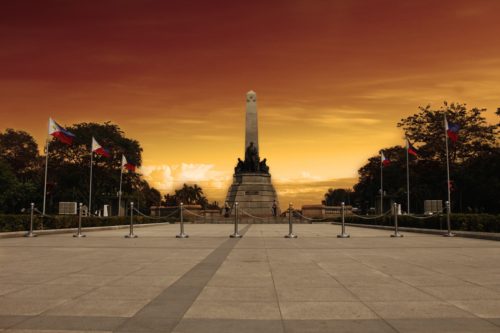
The Wisdom in Irritation

By wingwmn · Follow: InstagramApril 10, 2018

“Warning: Manila is going to frustrate you.”

“Nah, I doubt it. Frustration happens only to those with an agenda. And I have zero agenda,” I arrogantly countered. “Plus,” I noted to myself, “I meditate. I got this. I am Peace Personified!”

Fast-forward a few months . . .

Back in Manila, and I am anything but the face of peace. I’ve become the Embodiment of Exasperation. Little random things trigger anger or irritation on a daily basis.

Michael Singer, author of The Untethered Soul, describes how these certain triggers become “pains”. In their essence, everything that occurs around us is neutral — they are neither good nor bad. It is we who decide to label them as such. Let’s take traffic — essentially, neutral. But one can consider it a massive deterrent to a destination (bad), while another can view it as opportunity for alone time (good). Singer explains that we label certain occurrences as “bad” when they rub up against what is delicate within us. That is, our own constructed self-identities.

We all have the tendency to grasp onto a self-identity to allow us to understand how we fit in. These identities come in various forms: I am a powerful politician. I am a loving wife and mother. I am a successful businessperson. I am intelligent and talented. I am young, stylish and beautiful. I am Catholic. . . These self-concepts help us orient with the world. They are the platforms we erect to keep us secure amidst the changes around us. It consoles us to believe that when we we know who we are, we know how to act, how to make decisions, and how to relate to other people. This is why we defend our self-identities so dearly. Because without them, who are we? And so it follows that if anyone challenges our constructed platforms, it triggers us emotionally.

But these self-concepts we’ve created are a false security. Relying on them and defending them aggressively for our self-worth is folly (and exhausting!), simply because nothing is permanent. Every cell in our body is changing. Our emotions change. Our moods, our desires. Power and influence are contingent on people willing to bestow it. Youth is fleeting. Success is fickle. Love fades.

Instead of being triggered and incessantly having to defend these self-concepts, it would be wiser to loosen our grip on them.

So, this is the process I have found myself to follow when I observe my jaws contract in irritation, or when my heart clenches in anger:
I, first, breathe out the emotion.
Then, I lean back and get curious about what this irritation is presenting to me. What is it telling me? If a “fat” comment triggers me, could it be that I have placed too much self-worth on appearance? If a service provider doesn’t respond, could it be that I still identify too much with New Yorker efficiency?
Then, I shake my head at my foolishness in the face of impermanence (because I do, in fact, have acquired a mid-life metabolism. And I am, in fact, no longer in New York).

Each time I do this, I relax a little more. Am able to go with the punches a little more. Take myself less seriously a little more. And have fun a little more!

Oh, Manila. In all your annoying glory, you teach. Salamat.


I would love to hear your thoughts.  Drop me a line in the comments section below.

Doing Nothing

By wingwmn · Follow: InstagramFebruary 9, 2018

“So what are your plans? What are you going to do for work? Where are you going next?”  I get these questions A LOT.

My standard I-respect-you-and-your-time answer has been:
“Not sure. Going with the flow. aka, Lost.” (or roughly translated to Tagalog, Ewan).

But if time weren’t an issue, my soapbox you’ll-be-sorry-you-asked answer would be:
“You know how it is when you’re trying to write something, and nothing is flowing, and one day through no effort or skill of your own, words start rolling out of your fingers? Or when you’re trying to decide between two options, you wait a few days and suddenly the answer becomes very clear?

These experiences hint at the fact that the universe has a ‘way’ that we cannot fully fathom. In all human endeavor, luck, timing, inspiration, and a whole battery of other nebulous factors out of our control, are in play. The act of creation (of art, of businesses, of our next steps) is orphic, and the universe is a wondrous yet complex co-creator. One thing is certain, though. If we respect the ‘way’, she will eventually clear a path for us. It’s quite like groping around in the dark — you feel only walls until you don’t, offering space to move forward. Or like turning a key in a lock — you jiggle against resistance until there is none, allowing effortless unlocking.

The ancient Chinese philosophy of Taoism prescribes a way to navigate this profound mystery. Life, it emphasizes, should therefore be a balance between Wu Wei (loosely translated to ‘Doing Nothing’) and Wu Bu Wei (‘Doing Everything’). There is a time and place for each one.

We all know well the concept of ‘Doing Everything’. In the modern world, the lack of movement equates to the lack of progress. So we go go go and do do do. We ‘don’t take no for an answer’ and ‘make things happen’.

In Taoism, however, there should be times set aside for ‘Doing Nothing’.  These include when our next steps aren’t obvious, or when we are met with constant resistance, or when we find ourselves rationalizing our actions rather than listening to our guts. This is when we should sit back and allow things to simmer. If we muscle our way through these moments of un-ready-ness, our actions reap very little. Or worse, lead to less than optimal results. Doing Nothing is to respect the course of nature and trust that while nothing is happening, everything is happening.

‘Doing Nothing’, however, does not equate to ‘eating chips on the couch waiting for the universe to hand you a job’. Rather, it is doing only what is effortless, what does not require force. It is making that one phone call, drawing that one illustration, writing that one sentence. And relaxing. Lao Tzu, founder of Taoism, reminds us, ‘Nature does not hurry, yet everything is accomplished’.

I have a few ideas about the future, but nothing is crystal clear. So for now, I jiggle until things are ripe. And when they are, I’ll know and I’ll be ready to Do Everything.”

(Steps off the soapbox).

I’d love to hear your thoughts.  Drop me a line below.

A Year of Living Simply

By wingwmn · Follow: InstagramJanuary 15, 2018

2017 was a wild, wild ride. She upheaved my career, downgraded my income, and uprooted me from what I long considered my home. She shot me out of my 2-bedroom Brooklyn apartment, through several European hotel rooms, a shared flat in London (and my sister’s couch) and finally onto where I am currently writing this — my parents’ Manila home. As a result, 2017 massively downscaled my possessions and profoundly upgraded my life.

It’s remarkable how the resolve to live simply in a material sense takes over every other aspect of one’s life. After I decluttered my environment, I soon found myself wanting to streamline my routines, my social obligations and my mental meanderings.  Here are some of the things I’ve learned about living richly with (much, much, much) less:

ON SIMPLIFYING YOUR DIET

1. Forget the fad diets and labels. Eat local. And do as Michael Pollan advises: “Eat food, not too much, mostly plants.”

2. Take advantage of the fact that you’re feeding only yourself. Eat what you want to eat (adhering to #1 above). So, food shop for a maximum of 3 meals ahead. This avoids having to eat (or throw out) something that doesn’t strike your fancy.

3. Make self-care a priority. To live richly, you first need to feel comfortable in your own skin.

ON SIMPLIFYING YOUR WARDROBE

4. Keep and buy only what is classic, basic, beautiful. Avoid too much patterns or loud colors.

5. Embrace your inner European and repeat your clothes. If you stick to the basics, no one will be able to tell. And if they do, who cares?

6. Never keep anything you aren’t using “just in case” – just in case you get invited to a costume party, in case it makes a trend comeback, etc. If you don’t see a concrete need for it in the future, throw it out. If, on the off chance, “just in case” happens to be the case, get a new one.

7. Don’t go on a shopping spree “because it’s on sale” or “because we’re in Paris”. Buy only what you need, when you need.

8. When traveling, feel free to go window shopping. It’s a great way to see local design aesthetic and probe local culture. If you fall in love with something you don’t need, take a photo. I promise you, it’ll feel as if you bought it.

9. When choosing between an item you LOVE and a similar one that is “just okay” but 20% the price of the other item, go get what you LOVE.

ON SIMPLIFYING YOUR BEAUTY ROUTINE

10. Know the clothes that look good on you. Know the type of fragrances that work for you. Ignore everything that doesn’t.

11. Don’t take the sample perfumes and creams if you have no intention of trying them.

12. If you do try the samples, and you decide you don’t like them, throw the rest away. There’s no point keeping what you don’t like.

13. Buy your beauty items one at a time. It’s worth taking the risk of discontinuity than finding a new scent (or moisturizer or shampoo or [fill in the blank]), and being stuck with bottles and bottles of items you’ve outgrown.

14. Facial wash is facial wash is facial wash. Any drugstore natural brand or mild baby soap will do.

15. Take care of your skin and you won’t need foundation.

16. The best make up is good nutrition, lots of water and 7 hours of sleep.

17. Move your body daily. Even if it’s just 10 sun salutations.

18. You don’t need an expensive gym membership. A yoga mat and decent walking shoes are plenty.

19. Visit your dentist regularly.

20. Get regular massages.

ON FINDING DAILY INSPIRATION

21. Be current with what is going on in your city. See exhibitions, galleries, theater, dance, movies. There is no need to purchase anything in the gift shop.

22. Soak in beautiful interiors. Visit a beautiful restaurant even if it serves mediocre food. Go for a drink.

23. Travel for travel’s sake. Not for shopping.

24. Listen to music regularly. Country music may even surprise you.

25. Read. Keep learning.

26. As much as possible (and it hurts me to say this), avoid buying physical books. Use a Kindle. Or the library.

27. If you live with people, find time to be alone. Even if it means waking up at 4 a.m.

28. Meditate.

29. Dine alone. See a movie alone. Go to an exhibit alone.

30. Take long walks in silence.

ON SIMPLIFYING COMPANY

31. Time alone prepares you to be fully present with others.  When you’re with company, be WITH them. Be interested in them. Be curious about them. Listen.

32. Say NO (nicely and firmly) to social obligations that you don’t want to attend.

ON DEVELOPING AN UNCLUTTERED MIND

33. Unclutter your mind through writing. Write away your agitation and your cogitation. It doesn’t matter where you write them.

34. That said, always have a notebook handy for random thoughts at random hours. Your notes don’t have to be pretty. You don’t have to reread them if not inclined.

35. Stop overthinking decisions. You already know what to do. Make the decision, implement, and move on.

36. Mind your own business and avoid judgements of others. Everyone is entitled to their own happiness.

37. Forgive easily. Let it go.

38. Don’t grasp on to negative feelings. It’s aging.

39. Know what you can control and focus on only that.

40. Know what is enough for you. Have only what you need.

41. Make room for creativity. Contribute a little piece of beauty into this world.

42. Find the humor. Always.


I’d love to hear your thoughts on simplifying your life. . . or on anything really.  Please comment in the section below.

The Life Changing Magic of Chasing the F*#ks

By wingwmn · Follow: InstagramDecember 20, 2017

“You are so inspiring. I want to be like you.”

“Yegads, please. Set your sights higher,” I advised.

“No really. I thought I was being stupid and irresponsible for doing this course at 29, but you showed me you can do anything at any age.”

“Grrrr.”

“I mean, look,” he said as he pointed to the massive hall teeming with our fellow design graduates and their guests. “You took this course and goofed around with these kids. I think it’s so cool that you don’t give a fck.”

Very sweet. But also very mistaken.

Truth is, I do give a fck. Many of them. Including about this course. I wouldn’t be my mother’s daughter if I pranced around life like a carefree gazelle. Instead, I plod around mulling over risks, assessing the chances of colossal embarrassment or failure. But the somewhat ‘unusual’ behavior I suspect my classmate was trying to point out is — like a moth to a flame, I am DRAWN to these challenges. If there is a chance for me to be in over my head, I am on it like white on rice. Call it a penchant for finding unpleasantness and diving in head first.

The more unpleasant, the greater the motivation for me to jump in. Many lifetimes ago, I was invited to be a substitute English teacher for 4 months in an all boys catholic high school. (Note: All Boys. Catholic. High School.) I had been out of university for just about a year, so the students would barely be younger than I was. When I came in to interview for the position, I was given friendly tips on how to survive the term:

  • Don’t smile for the first week. You must not show softness or they boys will walk all over you;
  • Dress code – ensure that chest, knees and elbows are covered at all times;
  • Keep the boys in front of you always. You’ll never know what they’re up to (or peering down into) when they’re standing behind you;
  • Be aware of random mirrors lying face up on the floor, particularly if you’re in a skirt. . . the list went on.

As if to confirm the warnings, while I was being given the campus tour, a few boys flung themselves against the metal grills separating us while heaving monkey noises.

I shook all the way home that day. I was acutely terrified of the opportunity, and my brain begged me to beg off. But because I was petrified, I called and accepted the job. And I threw up everyday that week.

Much has been said about the economic value of facing challenges. Like building muscle, conquering challenges helps one grow and adapt. It prepares one to learn HOW to learn new skills in an ever-changing economic environment where, by 2025, an estimated 75% of the workforce will consist of freelancers and entrepreneurs.  Bla bla.

Sure, that’s all well and good.

But the reason I nosedive into discomfort is far less strategic. I do it simply for that incredible sensation of liberation — that childhood feeling that accompanies fiiiinally jumping off the high diving board. For me, there is an almost palpable feeling of expansion when you break through the confines that fear traps you in.

When you become a discomfort-chaser, the small fcks (like solo dining) become easy hurdles and the bigger fcks (like taking a design class with ZERO design experience alongside insanely talented kids half your age) become familiar territory to navigate. Then life becomes a string of exhilarating experiments and adventures. Sure, you may find yourself embarrassed once in a while. Or you just may find yourself randomly taking a design class in London, or teaching a group of the sweetest boys, having the absolutelyfckingtastic time of your life.

***
Neither here nor there, but if you’re interested in checking out what I’ve been up to in the said design class, check out anipayumo.com

As usual, I would absolutely love to hear your thoughts in the comments section below.

The Design Chronicles #4: The Voice

By wingwmn · Follow: InstagramOctober 22, 2017

This design course is my current battle field. Each day, I am forced to bleed out yet another new idea from a fully-drained idea bank. I shatter nerves and pull muscle frantically diving towards end-of-day deadlines. I wrestle with new and strange software. I grapple with a pencil to produce barely coherent sketches; choke my brain with designer trivia; wring out reports; swipe material for my visual diary; investigate personas; draft plans on brand ideas: duck from ugly subway posters, and combat the urge to analyze the layout of every book I read.

All that is the easy bit. The biggest battle I wage is with the endless chatter of my ego. From the moment I set foot in the classroom to the walk back home, this ego is my crazy-man-on-the-subway whom I have been trying to ignore and struggling to subdue.

Humility, or the absence of ego, is like a muscle that needs to be trained.  Subjecting the muscle to effortful activity strengthens it.  To remove ego, Ryan Holiday suggests “put(ting) yourself in rooms where you’re the least knowledgeable person. That uncomfortable feeling, that defensiveness that you feel when your most deeply held assumptions are challenged—what about subjecting yourself to it deliberately?”  I confirm.  With this course, my efforts to remove ego is in Iron Man mode.

You see, ego is our own personal marketing strategist. Its aim is to construct a formidable story of ourselves to sell to others, to establish our “market position”. To do this, our ego picks what it believes are our unique selling points and exploits it. And it panics when this neat little marketing story is threatened. It babbles, it chatters, it blubbers.

You can imagine the hysterics mine was in since I started the course. “Double-u. Tee. Eff,” it whined. “Mediocrity is NOT a good story to sell.” And everyday, it slithers in and tries to lure me away. “Why work so hard?  You could be back in NY.  Or on vacation.  How about you call in sick and hie off to Paris for the rest of the term?” While I get design advice from a classmate, its unproductive voice interjects, “She was born while you were on your way to prom. What does she know?” It attempts to convince me that getting feedback is unnecessary. And it flashes neon signs above friends who are rising the corporate ladder, “See what you’re missing?”

Ego is the old-fashioned supervisor that stifles us.  It keeps us from exploring and pushing ourselves. From learning new skills. From showing our amateur work.  It denies us self-improvement and keeps us wedged in the flimsy, pretty packaging it has made for us. And so if we have the earnest desire to learn something new, we should be prepared to put in the hard work, buckle down and wage the daily war against this crazy chatter.


The Design Chronicles #2: Mood Board Awakenings

By wingwmn · Follow: InstagramOctober 5, 2017

This week, we were introduced to the mood board. Many mood boards. After receiving a client brief and before doing anything — putting pencil to paper, conjuring up color palettes, or even panicking — we were required to create mood boards. This, we learned, should kickoff every design process.

The low down on a mood board: it is a collection of images that evoke the mood or personality of a brand. It is used to get the designer and the client on the same page.  Words can only do so much (one man’s “classic” might be another man’s “boring”), and being able to visualize the design in the same way is key. For a designer, it is also an aid in the development of a design. From the images, a designer takes inspiration for color, typography, layout, etc. For this amateur designer, they were my saviors in getting the creative juices flowing. Photos of a volcano, shattered glass, and an indian scarf inspired my brochure for a coding school. Wool scarves, a camp fire, and a woman in lingerie curled up in a field of hay inspired the color palette for an ice cream ad. Naturally.

This mood boarding process brought some liberating realizations:

That beautiful design is always the child of a banal process. I used to think that a clever logo or gorgeous film poster popped up in the designer’s mind fully formed; that design was the realm only for the “recognized creatives”.  Not the case. Designers are ultimately designing for their clients, and so the finished product has to be born out of the visual guidelines established with them. Designers, then, are necessarily inspired by the mood boarding process (or their equivalent per designer). Not by the elusive creative genius.

That nothing is truly original. Every beautiful design (and I will hazard to say, every work of art) has been inspired by something.  Consciously or subconsciously, a creator is influenced by all that she has experienced — art, nature, films, interiors, food, music, books, travels, history, a bad day. Even the Mona Lisa was inspired by someone.

“There is nothing new under the sun.  Not even Manet.” – Jules Breton

“Originality is way overrated. To make, you need to take. All artists do.” – Darby Barnnard

BUT, That filtering inspiration through the prism of the unique individual produces truly unique work. Every person has a singular story; each of us is the confluence of our days. And as objective and clinical as she may try to be, a designer’s history and influences always stand between the mood board and the final product.  It is remarkable that in class of 47, there are 47 unique creations for the exact same brief — each a little nod to the kaleidoscope of a person behind the design.

Aaaaall this to say, creativity is not reserved for the select few.  It is accessible to anybody with the willingness to put in the work, an eye open to inspiration, and the courage to reveal a little of themselves.

The Design Chronicles #1: Into the Wild

By wingwmn · Follow: InstagramSeptember 27, 2017

I’ve hurled myself headfirst into one of the most ridiculous situations I’ve ever been in. I am now attending a 3-month, intensive, full-time Visual Design course. I knew it was going to be a big shift for me, but I wasn’t expecting it to approach the levels of preposterous.

On Day 1, it became very apparent that I was THE throbbing sore thumb of the class. Out of a class of 47, I am one of the few who’s had almost 2 decades of work experience. Most of my classmates have barely had 2 decades of LIFE! More saliently, I am the solitary left brain among a sea of rights. My classmates are all vibrant creatives — furniture makers, fine arts graduates, UX designers, DJs, art directors, architects. I’m the sensible financier. They think in shapes and colors; I spout out numbers (and some words). They Photoshop; I Excel.

A Quick Share of Week 1 

Designers are tasked to solve vague client problems. Such as “I want a classic logo”. Ummm… what does that mean? How does one define ‘classic’? Is it Apple classic? Or Kellogg’s cereal classic? The client is likely going to be uncertain on how to answer that himself.  It is the job of the designer to determine that.

Solving such obscure problems is much like finding our way out of a dark forest. We take small incremental steps forward and feel our way through. We discover.  In design, this is called Prototyping and Testing.

Prototyping. In this phase, the designer roughly sketches out various options (key word being rough). In class, we are normally given 20 minutes to produce 20 sketches. “Don’t be too precious,” they remind us when we focus too much on one particular design.  The key is to quickly come up with a variety of solutions to test.

Testing. The designer then chooses 3 best designs and solicits feedback on them. The client points out the elements that are or aren’t working for him. The designer goes back and refines her idea, then seeks more feedback.

This process of sketching and feedback is incremental and iterative until an optimal solution is found.

Designing our Lives

This design process can be applied to any problem that has no clear answer, or that has a multitude of possible answers. The guys at Stanford’s Life Design Lab teach how to apply the principles when we hit upon the quintessential question, “What do I do with my life now?”  This question is the proverbial dark forest.  As prescribed, we take small steps and feel; prototype and test.  So, for example, if I think I might want to open up a restaurant, I shouldn’t go full-throttle into establishing one immediately. That would be “too precious” – too much investment of time and money on something I am not sure is right for me. I might end up hating it, but will be in too deep to have the flexibility to backtrack.  So I dip my toe in by perhaps first working in a restaurant, or talking to restaurant owners, or doing weekend catering.  And I reflect and consider before I dive.

This design course is my weekend catering. It’s a prototype of my long-standing unexplored interest in visual design. It is short and rough. I don’t yet know where this will take me. So far, I’ve had my ego crushed and my mind expanded.  It is a lot of hard work and yet I’m having the time of my life. So the jury is still out on what happens from here. I may realize that I may not have the skill nor the interest to ever decipher Helvetica Neue from Gotham fonts. Or, I may realize that I do, in fact, have a hibernating baby bear of a right brain.  I will discover soon enough.  After all, that is the point of this spectacular absurdity.

Sacred Space

By wingwmn · Follow: InstagramSeptember 14, 2017

London

It is 4:30 in the (very early) morning. It’s absolutely silent other than the hum of the radiator; dark other than the glow of the kitchen light. The autumn chill is clinging to my back.

I’m up before the household, the city. I’m up before the sun. Up before the news. Before my mind can form doubts and checklists.

These have been my mornings (although not necessarily always this early) for as long as I can remember.  Since college, I’ve somehow made it a habit to get up at least 3 hours before my day officially starts. (Lately, in the busy-ness of packing, moving and deciphering next steps, I’ve needed larger swaths of time). This period has become my non-negotiable.  My “sacred space” –  to listen, to ground, to discern. A space where, as Joseph Campbell describes, I can find myself over and over again.

Everyday, I sit in silence. Then I have tea and read. Or write. Or just continue to listen to what my life/gut/soul might be whispering.

Sometimes, nothing happens. Other times, the world in all its splendid worth-the-eyebags wildness does.

“The soul is like a wild animal — tough, resilient, savvy, self-sufficient, and yet exceedingly shy. If we want to see a wild animal, the last thing we should do is to go crashing through the woods, shouting for the creature to come out. But if we are willing to walk quietly into the woods and sit silently for an hour or two at the base of a tree, the creature we are waiting for may well emerge, and out of the corner of an eye we will catch a glimpse of the precious wildness we seek.”
–Parker Palmer


New York, the Buddhist

By wingwmn · Follow: InstagramSeptember 2, 2017

London
“New York will always be here, and [will] never care,” a friend texted.

Another friend, in a separate conversation, intimated, “When you leave New York, the void left will instantly be filled by endless other New York incidentals — MTA delays, work frustrations, other friends . . .”

After silently recalling that quote about not needing enemies when you’ve got friends like these, I thought about the Buddhist lesson in non-attachment these guys were inadvertently imparting:  you’ll miss out on the promise of what is in front of you if you don’t learn to let go.  New York knows this all too well.  Things slide off New York like teflon. Fiery arguments provoked in the subway are shaken off a minute later with a shrug of the shoulders. Extraordinary dates kindled each night fade off under no-follow-throughs. Transformative conversations transpire and vanish between strangers who will never see each other again. New York is bu.sy.  It keeps moving. It doesn’t dwell, doesn’t cling. What is important, though, is when it is there, it is there.

As I took a bite (literally and figuratively) out of everything the city offered, New York was there with me. The romance between us was intense.  It educated me, then it partied with me until I had no more party left to give. It extricated preconceived biases out of me. It stoked my corporate ambition then drained me of all of it. It bombarded me with creative inspiration, and assaulted me with new aesthetic sensibilities. It beat organized religion out of me and crammed in place a solid home-spun spirituality. It wrung out of me love and hurt I never knew I had. It squeezed independence out of me, and pounded me with solid support. And it etched out for me the finest group of friends one can only dream of. New York put this very sheltered island-girl through its furnace and spat out something unrecognizable 15 years later. Then yesterday, as I was made to realize, it gave her a good-bye squeeze and turned right back around to dealing with its endless New York incidentals.  Youch.

So fine, New York.  It’s a deal. You go back to relishing the best blue skies on the planet, the bushy-tailed newcomers, and your majestic efficiency. I’ll concentrate on my current incidentals and feel the feels of this upcoming adventure. No jealousy.  And when I return, we can continue this insane love affair.

Meanwhile, feel free to drunk text once in a while. I really won’t mind.


  • « Previous Posts
  • 1
  • …
  • 4
  • 5
  • 6
  • 7
  • 8
  • Next Posts »
© 2026
Design by SPYR